
The Best Air Duct Cleaning Method for Bell, CA Homes: Source Removal With Mechanical Agitation and HEPA Negative Air
Choose source removal using mechanical agitation paired with HEPA-rated negative air pressure - unless your ducts contain pre-1980 asbestos insulation, in which case the method must begin with certified containment and abatement protocols before any cleaning occurs. In Bell, this distinction matters more than in most Los Angeles suburbs because the debris coating local duct walls is not ordinary household dust. It is darker, denser, and adhesive - a diesel-soot and industrial particulate mix that low-velocity air-sweep methods simply redistribute rather than remove. Call (844) 685-6342 and we’ll take a look at what is actually there, and then we will tell you what we found.
We’ve been cleaning ducts in Bell since 2012, and the material we pull from post-WWII bungalows near the I-710 corridor looks nothing like what comes out of homes in Pasadena or Torrance. That visual difference is the first clue to which method actually works.
What Bell Homeowners Should Know About Local Duct Contamination
Bell sits directly adjacent to Vernon, California’s most intensively industrialized city, and the I-710 freight corridor cuts through carrying diesel truck traffic to the Ports of Los Angeles and Long Beach. Residential ductwork here accumulates industrial particulates, diesel soot, and combustion byproducts at rates far exceeding typical Los Angeles suburbs. The result is a distinctive dark, oily debris that bonds to sheet-metal duct walls rather than settling loosely.
This matters for method selection because two categories of contamination respond to entirely different cleaning approaches:
- Ordinary settled dust - pale, loose, primarily skin cells, textile fibers, and pollen. Airflow alone or light contact can dislodge it.
- Diesel-ultrafine bonded buildup - dark, oily, adhesive, containing carbon black and polycyclic aromatic hydrocarbons from combustion. This material requires mechanical agitation to break the surface bond before extraction.
Most “best method” articles online ignore this distinction because they assume all duct debris behaves the same. In Bell, that assumption leaves homeowners with ducts that look clean from the register but remain coated with active contamination deeper in the run.
Why Source Removal Is the EPA-Recognized Standard
The Environmental Protection Agency and the National Air Duct Cleaners Association both define source removal as the preferred method for duct cleaning. Source removal means physically dislodging contaminants from duct surfaces and immediately removing them from the building - not pushing debris deeper into the system or capturing only what happens to become airborne.
The method requires three simultaneous elements:
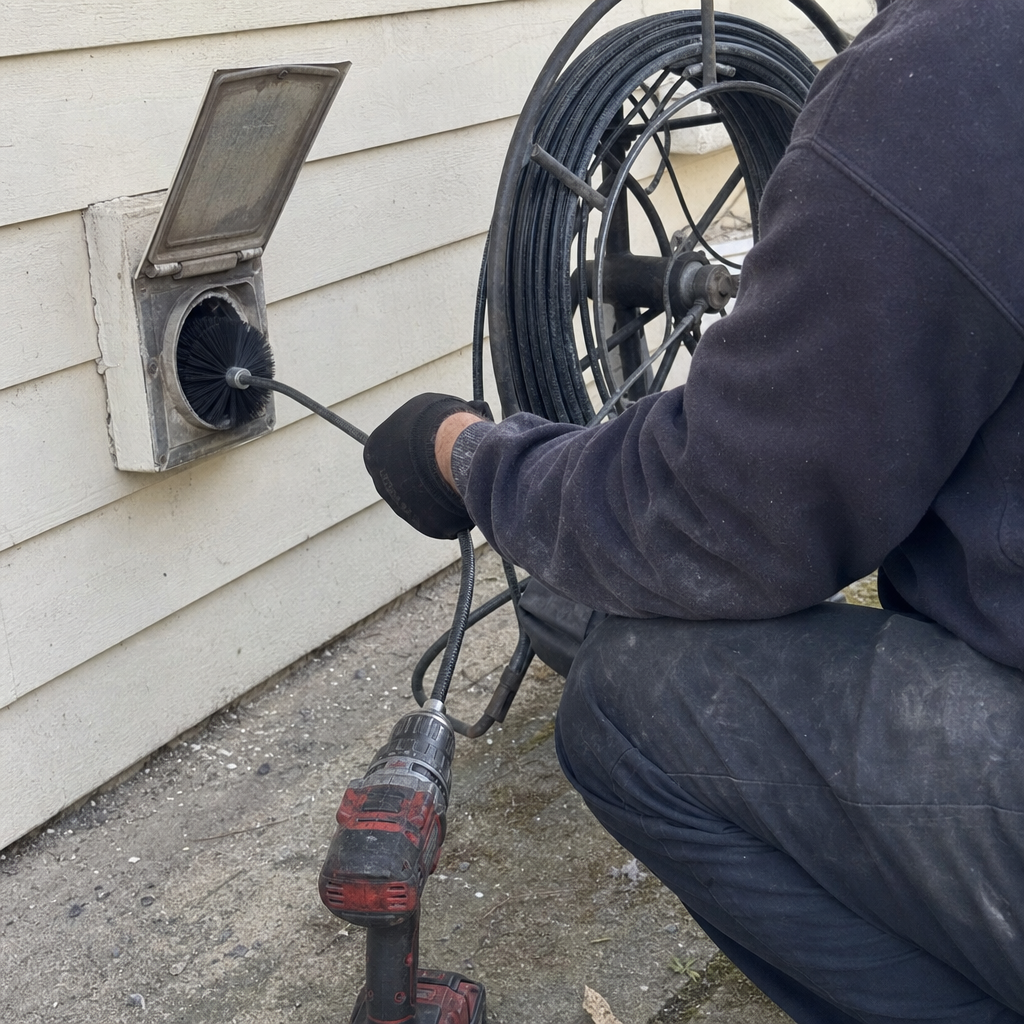
- Mechanical agitation - brushes, whips, or compressed-air tools that make physical contact with duct walls to break the bond between contamination and surface
- HEPA-rated negative air pressure - a vacuum system drawing 2,000+ CFM at the duct level, creating airflow toward the collection point so dislodged debris cannot escape into living spaces
- Containment at access points - sealed connections preventing any bypass of the extraction stream
Air-sweep-only methods, sometimes marketed as “no-contact” or “pure air” cleaning, skip the mechanical agitation step. For loose pale dust in low-contamination environments, this may suffice. For the carbon-bonded buildup we find in Bell homes near the I-710, air sweeping alone polishes the surface without breaking the adhesive bond. The contamination remains, continues off-gassing, and becomes a reservoir that re-contaminates the system after the technician leaves.
We use professional-grade equipment from Air Duct Cleaning specialists including Rotobrush contact systems, Nikro HEPA negative air machines, and Abatement Technologies containment hardware. These are the same brands serious HVAC contractors specify for commercial and healthcare applications - not consumer-grade alternatives that generate marketing copy but lack the contact pressure and airflow volume for genuine source removal.
How Bell’s Climate and Housing Stock Affect Method Choice
Bell’s housing stock is dominated by post-WWII bungalows and small multi-unit buildings constructed between the 1940s and 1960s. Many retain original sheet-metal duct runs that were never designed for modern filtration loads. Pre-1980 insulated ductwork in these homes may incorporate asbestos-containing duct wrap or duct board, requiring technicians to identify and handle these materials appropriately before cleaning begins.
The local climate compounds the contamination problem. Bell sits deep in the LA Basin without coastal airflow relief, trapping smog and industrial emissions at ground level - particularly on weekday mornings when I-710 truck traffic peaks. HVAC systems run long cooling cycles pulling this degraded outdoor air through ducts for much of the year, accelerating the rate at which particulate matter and diesel ultrafines coat interior duct surfaces.
A home in Bell runs its cooling system substantially more annual hours than a comparable home in coastal Long Beach or San Pedro. More runtime means more air volume passing through the ducts, more filtration load, and faster accumulation of the bonded contamination that requires mechanical agitation to remove. The threshold for what “clean” means here is higher because the re-contamination rate is higher.
Camera Inspection: The Method Is Only as Good as Its Verification
Every job we complete at Bellows Air Duct & Vent Co. includes camera inspection before and after work begins. Without a visual record, the homeowner has no way to distinguish a method that worked from a method that was merely applied. The camera makes the method’s result verifiable.
We’ve seen competitors run air-sweep equipment through Bell ducts and declare the job finished. The registers look clean. The homeowner has no reason to doubt the result. But a camera sent six feet past the register reveals the original dark coating still adhering to the duct wall, now slightly disturbed and more likely to flake into the airstream than before.
Our before-and-after camera record shows exactly what was removed and what the method accomplished. If the contamination type required mechanical agitation and we did not provide it, the camera would show that failure. We provide the record because our 90-Day Done Right Promise means we return at no charge if the work is not right - and we prefer to get it right the first time.
Comparing Methods: What Actually Gets Used in Bell
| Method | How It Works | Best For | Limitation in Bell |
|---|---|---|---|
| Source removal with mechanical agitation + HEPA negative air | Contact brushes break surface bond; simultaneous vacuum extraction captures debris at source | Diesel-soot bonded buildup, long-neglected systems, post-construction cleanup | Higher equipment and labor cost; requires trained technician |
| Air sweep (non-contact) | Compressed air dislodges loose debris; vacuum collects what becomes airborne | Light dust in low-contamination environments; maintenance cleaning between deep cleans | Cannot break adhesive bond of carbon-black buildup; redistributes oily residue |
| Rotary brush with portable vacuum | Powered brush scrubs duct walls; shop-vac or portable unit collects debris | Short duct runs with accessible registers; light to moderate contamination | Portable vacuums lack CFM for containment; risk of debris escape in pressurized system |
Our recommendation for Bell homes: Full System Cleaning via source removal with mechanical agitation and HEPA negative air pressure, verified by camera inspection. The additional equipment and training cost is recovered in effectiveness - the job does not need repeating in six months because the bonded contamination was actually removed rather than redistributed.
What Does Air Duct Cleaning Cost in Bell, and What Affects the Price?
Most complete residential source-removal cleanings - or Commercial Duct Cleaning for larger systems - in Bell range from $450 to $850 for a single-family home with 8 to 15 registers. Several variables move the price within this range:
- Register count and duct length - more access points and longer runs require more time and equipment setup
- Contamination severity - heavy diesel-soot buildup requires slower agitation passes and more filter changes during extraction
- System accessibility - crawl space or attic duct runs in post-WWII construction add labor time
- Asbestos identification - pre-1980 duct insulation requiring abatement protocol before cleaning
- Additional services - dryer vent cleaning, HVAC coil cleaning, or duct sealing requested at same visit
We disclose all pricing before work begins. The number we quote on the phone is the number on the invoice. Our standing offers include $50 off any repair over $250, a free second opinion on any written estimate, an $89 seasonal tune-up, and a permanent 5% senior and veteran discount.
Call (844) 685-6342 for an exact quote on your home - estimates are free, and we’ll take a look at what is actually there before recommending any specific method.
FAQs
Yes, when performed by technicians who first inspect for asbestos-containing materials and adjust agitation pressure to the duct gauge. Bell’s post-WWII housing stock includes many original sheet-metal runs that are structurally sound but may have pre-1980 insulation requiring special handling. We identify these conditions during our initial camera inspection and modify the method accordingly - never applying mechanical pressure to deteriorated duct board or disturbing friable insulation without containment. If you’d like us to assess your specific system, call (844) 685-6342 - estimates are free.
How Often to Clean Air Ducts? (Bell, CA) - every 3 to 5 years for most Bell homes, and every 2 to 3 years for properties within a quarter-mile of the I-710 corridor due to accelerated diesel-soot accumulation. The long cooling seasons in the deep LA Basin mean local HVAC systems run more annual hours than coastal areas, pulling more outdoor particulate through the ductwork. Homes with original post-WWII duct runs that lack modern filtration should err toward the shorter interval. Call (844) 685-6342 and we can evaluate your specific contamination rate based on your home’s age, location, and system type.
The only reliable way is visual inspection with a duct camera - the dark, oily character of diesel-soot bonded buildup is unmistakable once seen, but invisible from the register. Pale, loose dust can be adequately addressed with lighter methods; the carbon-black residue common near Bell’s industrial corridor requires contact agitation. We perform this inspection at no charge before quoting any work, so you know exactly what contamination type is present before deciding on a method. Call (844) 685-6342 to schedule a look.
Low-priced offers typically use portable equipment and air-sweep methods that take half the time and require minimal technician training. In Bell’s contamination environment, these methods leave the adhesive diesel-soot residue in place - the ducts look cleaned from the register, but the actual contamination remains. The EPA and NADCA both warn against bait-and-switch pricing that quotes low and discovers “unexpected problems” at the door. Our upfront pricing is disclosed before work begins, consistent with our founding promise of no scare tactics and no bait coupons. The 90-Day Done Right Promise backs every job in writing. For a square deal on method-appropriate cleaning, call (844) 685-6342.
Key Takeaways
- Bell’s location near Vernon and the I-710 corridor creates a distinctive dark, oily duct contamination that bonds to sheet metal and requires mechanical agitation to remove
- Source removal with HEPA negative air pressure is the EPA/NADCA-recognized standard for this contamination type
- Air-sweep-only methods redistribute bonded diesel soot without removing it
- Camera inspection before and after work is the only way to verify the method actually worked
- Bell’s long cooling seasons and post-WWII housing stock create unique conditions that affect both contamination rate and cleaning approach
If you’d rather have it looked at, Bellows Air Duct & Vent Co. offers a no-pressure assessment in Bell - call (844) 685-6342. Ray Castillo has been serving this community since 2012, and our team answers live 24 hours a day.
Written by Ray Castillo, Owner, Bellows Air Duct & Vent Co. at Bellows Air Duct & Vent Co., serving Bell, CA.