
5 Mistakes to Avoid With Duct Repair & Sealing
The five biggest mistakes homeowners make with duct repair and sealing are: sealing only visible joints without pressure-testing, using duct tape on seams, resealing without inspecting for damaged flex runs, ignoring insulation during sealing work, and skipping post-job airflow verification. These errors cost Los Angeles homeowners hundreds in repeated service calls while their utility bills stay high. If you’d rather have it done right the first time, call Bellows Air Duct & Vent Co. at (844) 685-6342 for a free estimate.
Here’s a common half-measure we see across Los Angeles: a technician seals the register boots where they meet the wall, charges full price, and leaves the trunk line connections in the attic completely untouched. The homeowner feels a draft stop near the vent, assumes the job is done, and three months later their summer cooling bill looks identical to last year’s. The leaks were never in the living room. They were in the 140-degree attic where no one thought to look.
Mistake 1: Sealing Visible Joints Without Pressure-Testing
A duct system is a closed loop. You cannot eyeball whether you’ve fixed it.
We’ve been called to homes in Silver Lake and Pasadena where a previous company spent two hours masticing every joint they could reach, then packed up and left. The homeowner still had hot rooms. When we pressure-tested the system, it was leaking at 28% - down from 32%, but nowhere near the sub-10% that makes sealing worth the investment.
Pressure-testing, or duct blaster testing, measures total system leakage before and after work. Without it, you’re paying for effort, not results. A proper test requires sealing all registers and returns, pressurizing the ductwork, and measuring airflow through the leaks. The number doesn’t lie.
At Bellows Air Duct & Vent Co. home, we camera-inspect and pressure-test before we quote, then test again before we leave. Our 90-Day Done Right Promise means if that number doesn’t hold, we come back. No paperwork, no arguing.
What to ask your contractor:
- Will you measure total system leakage before and after?
- What CFM leakage rate do you guarantee?
- How do you access joints inside walls or soffits?
Mistake 2: Using Duct Tape on Duct Seams
The product is misnamed. Duct tape is not for ducts.
The adhesive on standard cloth-backed duct tape degrades rapidly in temperature swings. In a Los Angeles attic that hits 150 degrees in August and drops to 45 degrees in January, that adhesive fails within two to three years. We’ve peeled failed tape off seams in Glendale homes where it was applied eighteen months prior, still sticky on the roll but powder-dry where it mattered.
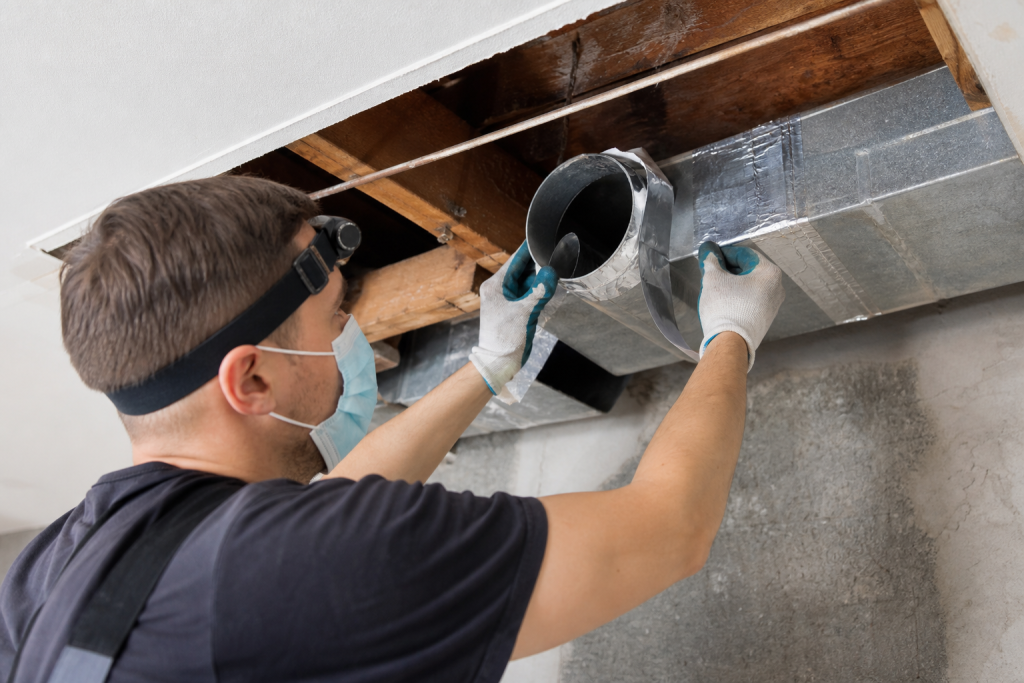
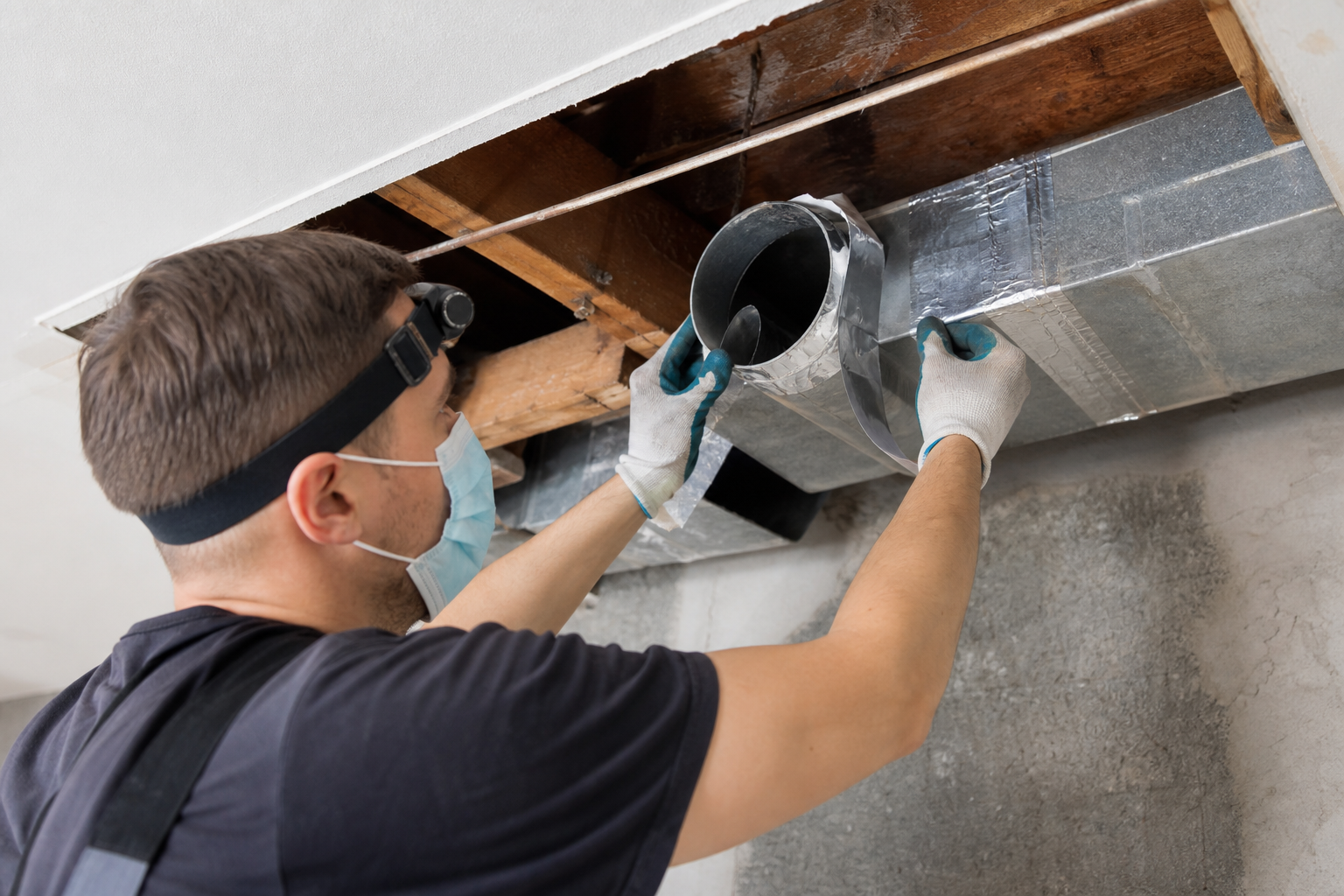
Proper duct sealing uses mastic, a fibrous paste that remains flexible for decades, or foil-backed tape rated for high temperatures and specifically labeled for HVAC use. Mastic is brushed onto seams and joints, then hardens into a permanent seal that moves with the metal. For flex duct connections, proper clamps and approved sealant are the only acceptable methods.
We use professional-grade materials from manufacturers like Abatement Technologies and Honeywell - the same products serious HVAC contractors specify for commercial installations. The difference is not marketing. It’s whether you’re sealing once or sealing again in two summers.
Mistake 3: Resealing Without Inspecting Flex Duct Runs
You cannot seal what is crushed, disconnected, or undersized.
In older Los Angeles neighborhoods like Highland Park and Eagle Rock, we regularly find flex duct runs that were pinched during a roof replacement, pulled loose by a raccoon in the crawl space, or simply never connected properly during original construction. Sealing the joints on a duct run that is 50% collapsed is like patching a tire with a broken belt inside. The air still isn’t moving.
Before any sealing work, every foot of accessible ductwork needs visual inspection. This is where camera inspection proves its worth. We send a scope through the trunk line and document what we find: crushed flex at a tight bend, a boot completely detached from the main line, a 6-inch run trying to serve a 12-by-14-foot master bedroom that was added in 1987.
Resealing a damaged system locks in the underlying problem. The right sequence is inspect, repair or replace damaged sections, then seal and test. Anything else is paying for a partial fix billed as complete.
Mistake 4: Ignoring Duct Insulation During Sealing
Sealed ducts without proper insulation create a new problem: condensation.
When you stop air leakage, you increase the pressure of conditioned air moving through the duct. In Los Angeles’s humid shoulder seasons, cool air in an uninsulated attic duct meets warm, moist attic air. The duct sweats. That moisture soaks into surrounding insulation, breeds mold, and eventually degrades your new seals from the outside in.
We’ve opened attic hatches in Torrance where the ductwork was meticulously sealed with mastic but wrapped in disintegrating R-4 fiberglass from 1986. The mastic was sound. The insulation was black with mold and falling off in sheets. The homeowner’s allergy symptoms had actually worsened since the sealing work.
Proper sealing includes assessing insulation condition and R-value. In attics that exceed 130 degrees, R-8 is the minimum any professional should accept. If your contractor seals without mentioning insulation, they’re not finishing the job.
Related services in Los Angeles: If your system needs more than sealing, Air Duct Cleaning in Seymour and HVAC Cleaning in Seymour address the full airflow path from unit to register.
Mistake 5: Skipping the Post-Job Airflow Test
The goal of sealing is not tighter ducts. It’s more conditioned air reaching the rooms where you live.
We’ve completed jobs in Studio City where pressure testing showed excellent leakage reduction, but a post-job airflow check revealed a damper that had been bumped closed during attic work, or a return grille that was accidentally blocked by a shifted insulation batt. The ducts were tight. The air wasn’t moving. The homeowner would have called us back in October wondering why the bedroom was still hot.
A proper airflow test measures CFM at each supply register and return grille, comparing before and after numbers. Problem rooms should show measurable improvement. If they don’t, the sealing solved a symptom while the real issue - a design flaw, a balancing problem, an undersized return - remains unaddressed.
This is where Dryer Vent Cleaning in Seymour intersects with ductwork thinking: any restricted airflow path, whether in your HVAC or your dryer vent, forces the system to work harder for the same result. We measure to confirm, not assume.
When to Call a Pro
Some homeowners in Los Angeles have the access, the tools, and the patience to inspect their own attic ductwork. Most don’t, and shouldn’t need to. If your energy bills haven’t dropped after previous sealing work, if you have persistent hot or cold rooms, or if you’re considering sealing as part of a larger efficiency upgrade, a professional evaluation with camera inspection and pressure testing is the only way to know what you’re actually paying for.
We answer calls 24 hours a day - a live person, not a voicemail system. Most jobs are completed in a single visit by background-checked, uniformed technicians. Our no-hassle upfront pricing means the number we quote is the number on the invoice. And our 90-Day Done Right Promise is in writing: if it’s not right, we make it right, no paperwork required.
Standing offers: $50 off any repair over $250; free second opinion on any written estimate; $89 seasonal tune-up; permanent 5% senior and veteran discount.
The Bottom Line
Duct repair and sealing is invisible work by nature. That makes it uniquely vulnerable to half-measures that cost full price. The five mistakes - skipping pressure tests, using the wrong materials, ignoring damaged runs, neglecting insulation, and failing to verify airflow - all share one trait: they produce a paid invoice and an unchanged utility bill.
The homeowners we serve in Los Angeles have lived in their homes for decades. They plan to stay. They want the job done once, done right, and never thought about again. That’s the standard we hold ourselves to, backed by 42 years of showing up when we say we will and standing behind the work with no arguments.
If you’re in Los Angeles and want your ductwork inspected, sealed, and verified by a company that documents every joint before and after, call Bellows Air Duct & Vent Co. at (844) 685-6342. Estimates are free, pricing is upfront, and our 90-Day Done Right Promise means we finish what we start.
Frequently Asked Questions
Ask whether pressure testing was performed before and after the work, and request the CFM leakage numbers. If your energy bills haven’t changed or you still have uneven temperatures, the sealing was likely partial or unverified. Call (844) 685-6342 for a free second opinion on any written estimate.
Individual damaged sections are usually worth repairing or replacing if the overall system is sound. Replacement of a crushed 20-foot flex run typically costs less than full system replacement and preserves your existing trunk line. We assess each run during camera inspection and quote only what’s necessary. Call (844) 685-6342 for an exact quote - estimates are free.
Properly applied mastic or rated foil tape on sound ductwork should last 20 years or more. The failure point is almost always improper material choice, incomplete surface preparation, or sealing damaged duct that needed replacement first. Our 90-Day Done Right Promise covers the workmanship; the materials we use are specified for the life of the system.
Yes, when done completely. Sealing prevents attic dust, insulation particles, and rodent droppings from being drawn into leaky return ducts. But if sealing is done without addressing insulation or moisture issues, condensation and mold growth can actually worsen air quality. The full job includes inspection, sealing, insulation assessment, and verification - not just patching joints.
Written by the team at Bellows Air Duct & Vent Co., serving Los Angeles since 2012.
Need Air Duct Cleaning Help?
Call Bellows Air Duct & Vent Co. - licensed & insured, here with fast after-hours help in Los Angeles.
(844) 685-6342