
Last updated July 25, 2026
Duct Repair & Sealing Maintenance Schedule: What to Do and When
The average home loses 20-30% of conditioned air through leaky ducts, but most of that loss develops gradually over years of skipped inspections - not from a single failure event. In Los Angeles, where summer cooling loads run six months or longer and winter heating cycles stress metal expansion joints, that slow bleed on your utility bill often goes unnoticed until a room stops keeping temperature entirely. This guide gives you a calendar-based maintenance schedule tied to your ductwork’s actual age and your home’s HVAC load, so small leaks get caught before they compound into expensive repairs. You’ll learn four distinct inspection intervals, what to watch between professional visits, and how Los Angeles climate patterns should shape your timing.
Quick Answer
Homeowners should follow four maintenance intervals: a post-installation check at 30 days, an annual visual inspection you perform yourself, a professional assessment every 3-5 years (or every 2-3 years for systems over 20 years), and event-triggered inspections after renovations, pest activity, or major HVAC repairs. In Los Angeles, schedule professional assessments in fall or spring to catch humidity-stressed joints before peak cooling or heating seasons begin.
Table of Contents
- Why a Schedule Matters More Than a One-Time Fix
- The Four Maintenance Intervals Every Homeowner Needs
- How Duct Age Changes Your Schedule
- What You Can Monitor Between Professional Visits
- Los Angeles Climate: When to Schedule for Maximum Value
- Maintenance Visit vs. Repair Visit: Know the Difference
- Common Mistakes to Avoid
- When to Call a Professional
- Frequently Asked Questions
Why a Schedule Matters More Than a One-Time Fix
Most homeowners treat duct sealing as something you do once and forget. That assumption costs money. Ductwork operates under constant pressure cycling - positive pressure when the blower runs, negative pressure when it shuts off, thermal expansion and contraction as conditioned air meets attic heat or crawlspace chill. Each cycle loosens tape adhesive, fatigues metal joints, and slowly pulls flexible duct connections away from boots and plenums.
We’ve seen this pattern repeatedly in Los Angeles homes built during the 1960s through 1980s construction boom. Original galvanized ductwork in neighborhoods like Van Nuys, Northridge, and Reseda often carries decades of layered repairs - foil tape over mastic over original sealant, each layer degrading on a different timeline. A single comprehensive sealing job solves the immediate leakage, but without scheduled follow-up, new gaps form at the next weakest point within 18 to 36 months.
The compounding damage works like this: a small leak at a trunk line joint reduces static pressure to downstream branches. Those branches now move less air, so the thermostat calls for longer run times. Longer run times increase thermal cycling throughout the system. Increased cycling accelerates seal degradation at other joints. Within three to five years, a system that tested tight at 5% leakage operates at 15% or higher - and the homeowner only notices when the summer electric bill spikes or a back bedroom won’t cool below 78 degrees.
A maintenance schedule interrupts this cycle. It catches the 2% leak before it becomes the 12% leak. It also creates documentation: when a Bellows technician camera-inspects your system every few years, you have visual proof of condition trends, not just a single snapshot. That record helps with warranty claims, home sale disclosures, and informed decisions about eventual replacement timing.
Our Bellows Air Duct & Vent Co. home page outlines how we approach this documentation on every job - camera verification before and after, with images you keep.
The Four Maintenance Intervals Every Homeowner Needs
Duct maintenance isn’t one task repeated annually. It’s four distinct activities with different purposes, different performers, and different costs. Skipping any interval creates a gap that the others cannot fully cover.
1. Post-Installation Check (30 Days)
Whether you’ve had new ductwork installed or major sealing work completed, the 30-day check is non-negotiable. New mastic and tape cure under thermal stress; initial blower vibration settles connections; and any installation shortcuts reveal themselves quickly under real load conditions. This check should be performed by the installing contractor at no charge - it’s built into proper workmanship. If your contractor won’t return at 30 days, that’s information about their confidence level.
What happens at this visit: visual inspection of all sealed joints, static pressure testing to verify design airflow, and thermal imaging or smoke testing to confirm no new leakage points developed during initial curing. In Los Angeles, where September heat waves often hit right after late-summer installations, this 30-day window frequently catches mastic shrinkage that cooler-climate contractors never see.
2. Annual Visual Inspection (Homeowner)
Once yearly, typically before your heaviest-use season, walk your accessible ductwork with a checklist. This takes 20 minutes and requires no tools beyond a flashlight and your HVAC knowledge. See the next section for specifics on what to monitor.
3. Professional Assessment (Every 3-5 Years)
A trained technician performs pressure testing, camera inspection, and seal integrity verification using equipment homeowners don’t own. This visit distinguishes maintenance needs from repair needs and establishes your system’s condition baseline. For Los Angeles homes with original ductwork, we recommend the shorter end of this range - every three years - due to our extended cooling season and the thermal stress it creates.
4. Event-Triggered Inspection
Schedule an inspection after any of these events:
- Major renovation involving wall, ceiling, or floor demolition
- Roof replacement or significant attic work
- Evidence of rodent or insect activity in attic or crawlspace
- HVAC compressor or blower motor replacement
- Visible water intrusion in attic or duct-containing spaces
- Sustained operation during wildfire smoke events with compromised filtration
Wildfire seasons in Los Angeles have lengthened considerably. When smoke penetrates attic spaces through soffit vents, fine particulates can accumulate on duct surfaces and accelerate seal degradation - particularly at flexible duct connections where static cling holds particles against adhesive surfaces.
How Duct Age Changes Your Schedule
Ductwork age isn’t just a number - it’s a predictor of failure modes, and your maintenance frequency should adjust accordingly. We group Los Angeles residential systems into three brackets based on what we’ve encountered across the San Fernando Valley, the Westside, and older Pasadena neighborhoods.
Under 10 Years: The Prevention Phase
Modern duct systems, properly installed with UL-181 rated flexible duct or sealed rigid metal, should need minimal intervention. Your schedule: annual homeowner visual inspection, professional assessment at year 5, then every 4-5 years thereafter. Watch for installation defects rather than age-related wear - crushed flexible runs, unsupported sagging longer than four feet, or original tape failing at the plenum connection.
Many newer Los Angeles homes and recent retrofits use Aprilaire zoning systems or Honeywell zone dampers. These add mechanical complexity: damper shafts penetrate duct walls, creating additional seal points that merit inspection at the 5-year professional visit even if the rest of the system tests clean.
10-20 Years: The Transition Phase
This is where we see the steepest increase in maintenance needs. Original mastic becomes brittle; foil tape adhesive degrades; metal trunk lines develop corrosion at low points where condensation collects. Your schedule: annual homeowner inspection, professional assessment every 3 years, and heightened attention to event triggers.
In coastal Los Angeles neighborhoods - Venice, Marina del Rey, San Pedro - the marine layer accelerates metal corrosion compared to inland valleys. We’ve replaced trunk sections in 15-year-old Hermosa Beach systems that showed equivalent wear to 25-year-old Van Nuys systems. If you live within three miles of the coast, treat your system as one age bracket older for scheduling purposes.
Over 20 Years: The Vigilance Phase
Original ductwork from the 1980s or earlier in Los Angeles was typically installed with minimal sealing standards - often just duct tape, not mastic, at joints. These systems leak as a baseline condition. Your schedule: annual homeowner inspection, professional assessment every 2-3 years, and immediate professional evaluation of any change in performance.
At this age, maintenance visits increasingly reveal repair needs. The schedule’s purpose shifts from prevention to managed decline - catching failures before they cause compressor damage, indoor air quality problems, or safety issues like backdrafting combustion appliances. Budget accordingly: a 25-year-old system may need $800-$1,500 in sectional repairs or partial replacement every few years, versus the $3,000-$6,000 cost of full replacement. The maintenance schedule helps you time that replacement optimally rather than reactively.
What You Can Monitor Between Professional Visits
Professional assessments use blower doors, duct blasters, and thermal cameras. But homeowners can catch significant problems early with simple observation. We tell our Los Angeles clients to perform this 20-minute walkthrough each October, before heating season begins, and again in April if they use cooling heavily.
- Check airflow consistency room-to-room. Close all doors, run the system for ten minutes, then feel each supply register with your hand. A register that used to blow strongly and now feels weak suggests a disconnected branch duct or significant trunk leak upstream. Note which rooms changed - this helps technicians isolate problems faster.
- Review 12 months of utility bills. Compare kilowatt-hours or therms against the same month prior year, adjusted for any rate increases. A 15% increase without corresponding weather extremes or occupancy changes suggests duct leakage or insulation degradation. Los Angeles Department of Water and Power customers can access historical usage online for easy comparison.
- Inspect accessible registers and boots. Remove floor or wall registers and look at the duct connection behind. You should see continuous sealant or tape at the boot-to-duct joint. Gaps, crumbling material, or disconnected flexible duct are visible problems requiring professional attention. Don’t reach into sharp metal edges.
- Listen for new noises. Whistling at registers indicates high velocity from undersized ducts or leaks creating pressure imbalances. Rattling in walls or ceilings suggests loose duct supports or separated joints vibrating against framing.
- Check attic and crawlspace ductwork visually. Only enter these spaces if you can do so safely with proper lighting and footing. Look for disconnected flexible duct, visible gaps at metal joints, condensation on duct exteriors, or pest damage. In Los Angeles, roof rats are common attic visitors from September through November - chewed flexible duct is a frequent finding.
Document what you find with phone photos dated and saved. When you do call a professional, this record accelerates diagnosis and prevents redundant inspection charges.
Los Angeles Climate: When to Schedule for Maximum Value
Los Angeles presents a specific thermal profile that should shape your maintenance calendar. Our Mediterranean climate delivers two distinct stress periods for ductwork: the extended dry heat of May through October, and the short but sharp heating demand of December through February, punctuated by Santa Ana wind events that drop humidity into single digits.
Here’s how this plays out at the joint level. Summer cooling runs six to eight hours daily in inland Los Angeles neighborhoods like Woodland Hills or Glendale. Metal trunk lines in 140-degree attles expand significantly; when the system cycles off, rapid contraction as attic heat reasserts itself fatigues rigid duct joints. Flexible duct, meanwhile, experiences constant flexion where it connects to metal boots, slowly working adhesive loose.
Winter heating reverses the stress pattern. Warm supply air meets cold attic metal, causing contraction during operation and expansion during off cycles. The thermal swing is smaller than summer but occurs against already-fatigued joints from the prior season.
Spring and fall are the optimal professional inspection windows. March through April, before peak cooling load, catches winter fatigue before it faces summer stress. September through October, after summer peak but before heating demand, catches summer degradation while joints are still accessible without emergency scheduling premiums. We schedule our heaviest Air Duct Cleaning in Seymour volume in these windows for exactly this reason - though our Los Angeles operation follows the same pattern.
Humidity swings matter too. Los Angeles summer humidity often drops below 30%, causing mastic and water-based sealants to cure harder and more brittle. Winter marine layer periods can push humidity to 70% or higher, promoting condensation at uninsulated joints and corrosion at any metal exposure. This oscillation between desiccation and mild corrosion is absent in consistently dry climates like Phoenix or consistently humid ones like Miami - it’s a Los Angeles-specific wear pattern that justifies our shorter recommended inspection intervals.
The Santa Ana wind events of October through January add a particulate factor. Fine dust infiltration through attic vents abrades duct exterior insulation and can penetrate small gaps at poorly sealed access panels. After significant Santa Ana periods, check your return air filter more frequently - heavy loading indicates substantial dust infiltration that may have reached duct interiors as well.
Maintenance Visit vs. Repair Visit: Know the Difference
Homeowners often conflate these two service types, leading to either overpayment for unnecessary work or under-treatment of developing problems. The distinction matters for scheduling, pricing, and expectations.
A maintenance visit preserves existing condition. The technician verifies that seals remain intact, tightens accessible clamps and supports, replaces degraded tape at easily reached joints, and confirms system performance matches prior baselines. Think of it as the ductwork equivalent of an oil change - routine, predictable, modest cost. Expect 1-2 hours, $200-$400 in Los Angeles market pricing, and no material disruption to your day. Our $89 Seasonal Tune-Up falls in this category for basic verification.
A repair visit addresses new or worsened conditions. The technician locates and quantifies leakage, identifies failure points, and performs corrective work - replacing duct sections, resealing major joints, repairing insulation, or addressing disconnected runs. This requires diagnosis time, material selection, and often access work in attics or crawlspaces. Expect 2-4 hours, $400-$1,200 depending on scope, and potential same-day completion if materials are on the truck.
The confusion arises when maintenance visits reveal repair needs. A homeowner schedules maintenance expecting a tune-up price, then faces a repair recommendation. This feels like bait-and-switch if the distinction wasn’t clear upfront. At Bellows, we separate these explicitly: our camera inspection shows you the condition before we quote, and our no-hassle upfront pricing means the maintenance rate and repair rate are both disclosed before work begins. If inspection reveals repair needs, you choose whether to proceed - no pressure, no surprise.
Your schedule should include both types proportionally. For a 15-year-old system: maintenance every 3 years, with understanding that roughly half these visits may escalate to repair quotes. Budget for this. A maintenance visit that catches a $400 repair need prevents the $1,500 compressor damage that uncontrolled leakage eventually causes.
Common Mistakes to Avoid
- Waiting for a room to stop conditioning entirely. By the time a bedroom won’t hold temperature, leakage has typically reached 20% or more. You’ve been overpaying on utilities for two to three years. Schedule at the first sign of uneven airflow, not the last.
- Applying duct tape as a permanent fix. Standard cloth-backed duct tape fails within months under thermal cycling. It’s a temporary emergency measure only. Proper sealing requires mastic, foil tape, or mechanical fastening - materials we carry from Abatement Technologies and other professional-grade suppliers.
- Ignoring post-renovation inspection. Los Angeles homeowners renovate frequently - ADU additions, kitchen expansions, whole-house updates. Contractors disturb ductwork routinely, often without realizing. Always schedule inspection within 30 days of substantial renovation completion.
- Assuming new HVAC equipment means new duct integrity. Compressor and furnace replacements rarely include duct inspection. We’ve found systems with brand-new 18-SEER condensers connected to 30-year-old ductwork leaking 25% of that efficient cooling into the attic. Efficiency ratings assume intact distribution - your investment is compromised by neglected ducts.
- Neglecting the return side. Supply ducts get attention because they deliver conditioned air. Return ducts operate under negative pressure, pulling unconditioned attic air into the system through any leak. This infiltration loads your filter, coils, and indoor air quality simultaneously. Inspect return plenums and trunk connections with equal care.
- Skipping fall inspection because “we barely use heat.” Los Angeles winters are mild, but heating cycles stress different joints than cooling. That “barely used” furnace still runs 300-500 hours annually in most Los Angeles homes - enough to reveal problems that summer-only inspection misses.
When to Call a Professional
Call when your annual inspection reveals any of these: disconnected duct sections, visible corrosion through metal, pest damage to flexible duct, water staining or active condensation on duct exteriors, or airflow changes exceeding 20% at any register. Call promptly if you smell musty or chemical odors from vents, which can indicate mold growth at leak points or backdrafting combustion gases. Call immediately if your carbon monoxide detector activates - this can indicate cracked heat exchangers or pressure imbalances from duct leakage affecting combustion appliance venting.
Bellows Air Duct & Vent Co. offers free estimates in Los Angeles - call (844) 685-6342. We’ll camera-inspect your system, show you exactly what we find, and quote upfront before any work begins. Our 90-Day Done Right Promise covers every repair: if it’s not right, we return at no charge with no paperwork required.
Frequently Asked Questions
Every 3 years for systems under 20 years, every 2-3 years for older systems, and annually for coastal homes within three miles of the marine layer. Los Angeles extended cooling season and humidity swings justify shorter intervals than national averages suggest. Call (844) 685-6342 to schedule - estimates are free.
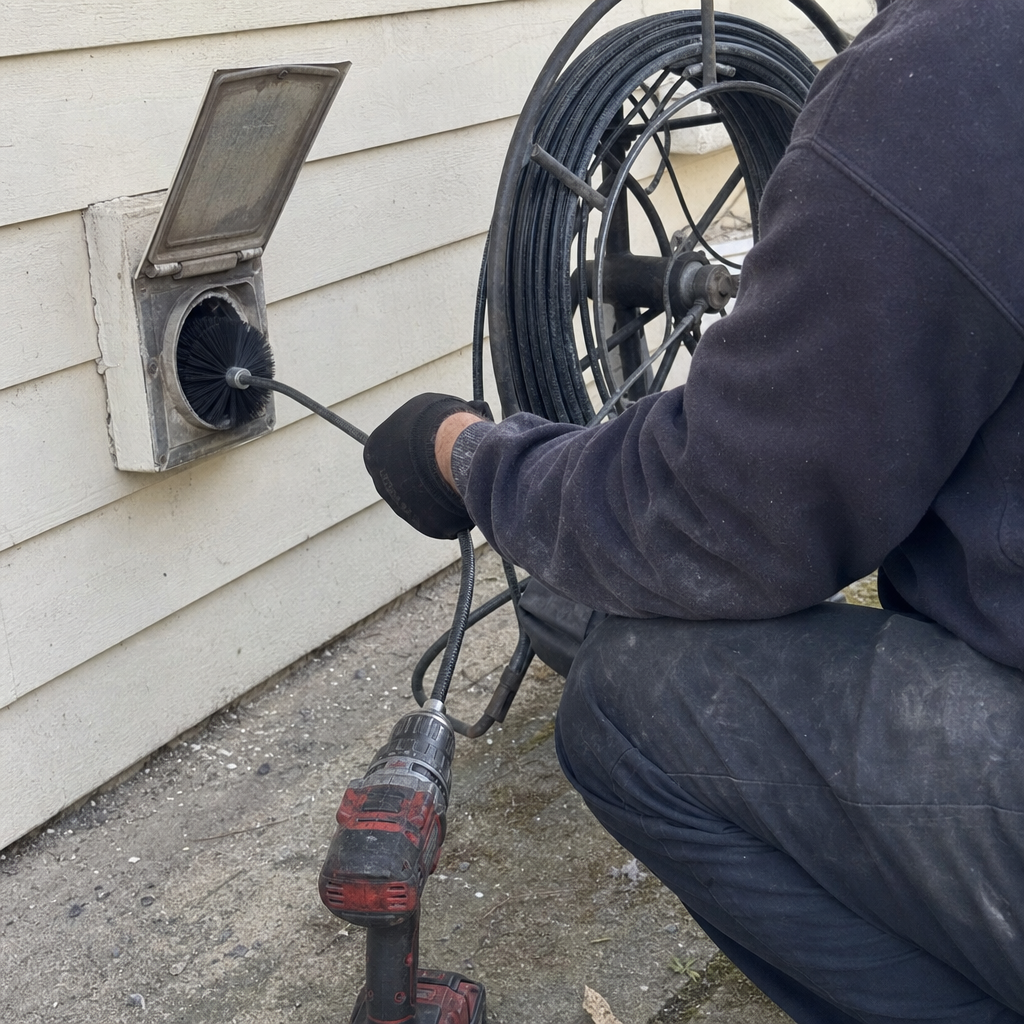
Duct sealing closes leaks and gaps in the ductwork itself; duct cleaning removes accumulated dust and debris from interior surfaces. Sealing improves efficiency and comfort; cleaning improves indoor air quality. They address different problems, though we often perform both when inspection reveals needs in both areas. Our Dryer Vent Cleaning in Seymour page explains our cleaning approach in detail.
Homeowners can address minor, accessible gaps at floor registers with UL-181 rated foil tape. Mastic application at trunk joints, plenum connections, or in attics requires proper access, ventilation, and technique to seal effectively without creating airflow restrictions. We don’t recommend DIY mastic work in confined spaces or at pressure-critical joints. The cost of professional sealing typically pays back within two years through utility savings in Los Angeles climate conditions.
Compare summer kilowatt-hours against the same month two years prior, adjusting for any rate increases. If usage rose 15% or more without temperature extremes or occupancy changes, duct leakage is a leading suspect. Other indicators that point specifically to ducts: uneven room temperatures, longer system run times, and dust accumulation near supply registers. A professional duct blaster test provides definitive measurement. Our HVAC Cleaning in Seymour service includes this testing where indicated.
For systems under 20 years with isolated leakage, repair and resealing is typically cost-effective. For systems over 25 years with widespread corrosion, disconnected branches, or asbestos-containing materials, replacement often delivers better long-term value. The break-even analysis depends on repair scope, remaining system life, and your planned tenure in the home. We provide both options with honest assessment of each - no replacement pressure on repairable systems.
We offer a permanent 5% Senior and Veteran discount on all services, plus $50 off any repair over $250. Our $89 Seasonal Tune-Up provides basic inspection and verification at a fixed price. We also provide free second opinions on any written estimate from another contractor - bring us their quote and we’ll assess whether the scope and pricing are appropriate for your actual condition.
The Bottom Line
Duct maintenance succeeds as a schedule, not an event. The four intervals - 30-day post-installation check, annual homeowner inspection, professional assessment every 3-5 years adjusted for age, and event-triggered follow-ups - create overlapping protection that catches problems while they’re still small. In Los Angeles specifically, our climate demands attention to spring and fall inspection windows, coastal corrosion acceleration, and the particulate stress of extended wildfire seasons. Treat ductwork age as a shifting risk profile, not a static fact. And distinguish maintenance from repair in your budgeting and scheduling, so you’re never surprised by the scope of work a visit reveals. The homeowners who stay ahead of this are the ones who never face the emergency call in August when the master bedroom won’t cool below 82 degrees.
Written by the team at Bellows Air Duct & Vent Co., serving Los Angeles since 2012.