
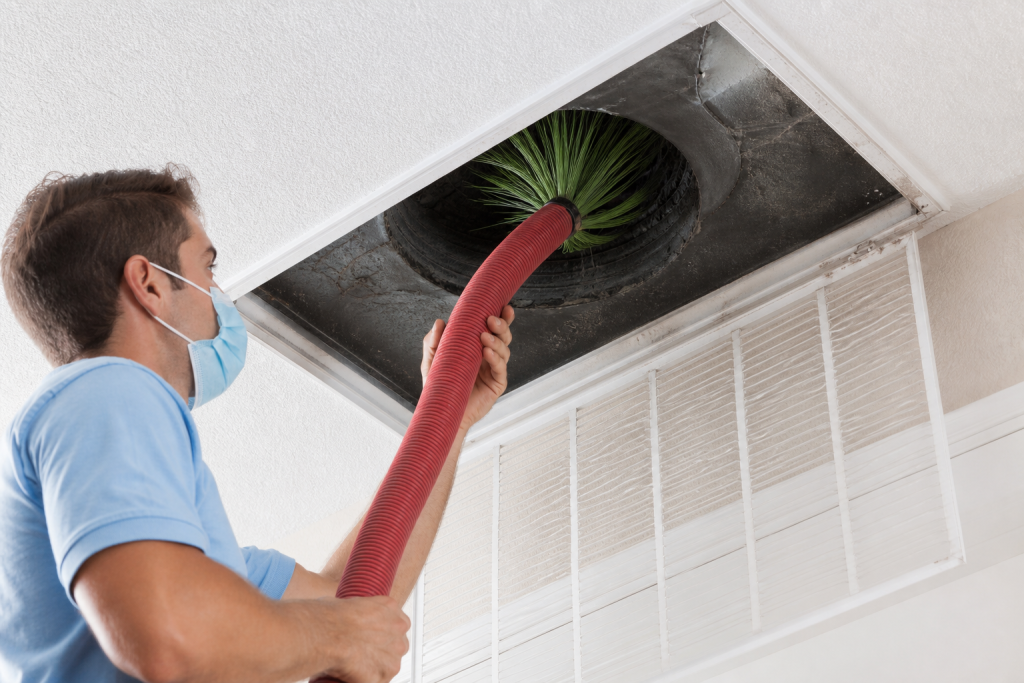
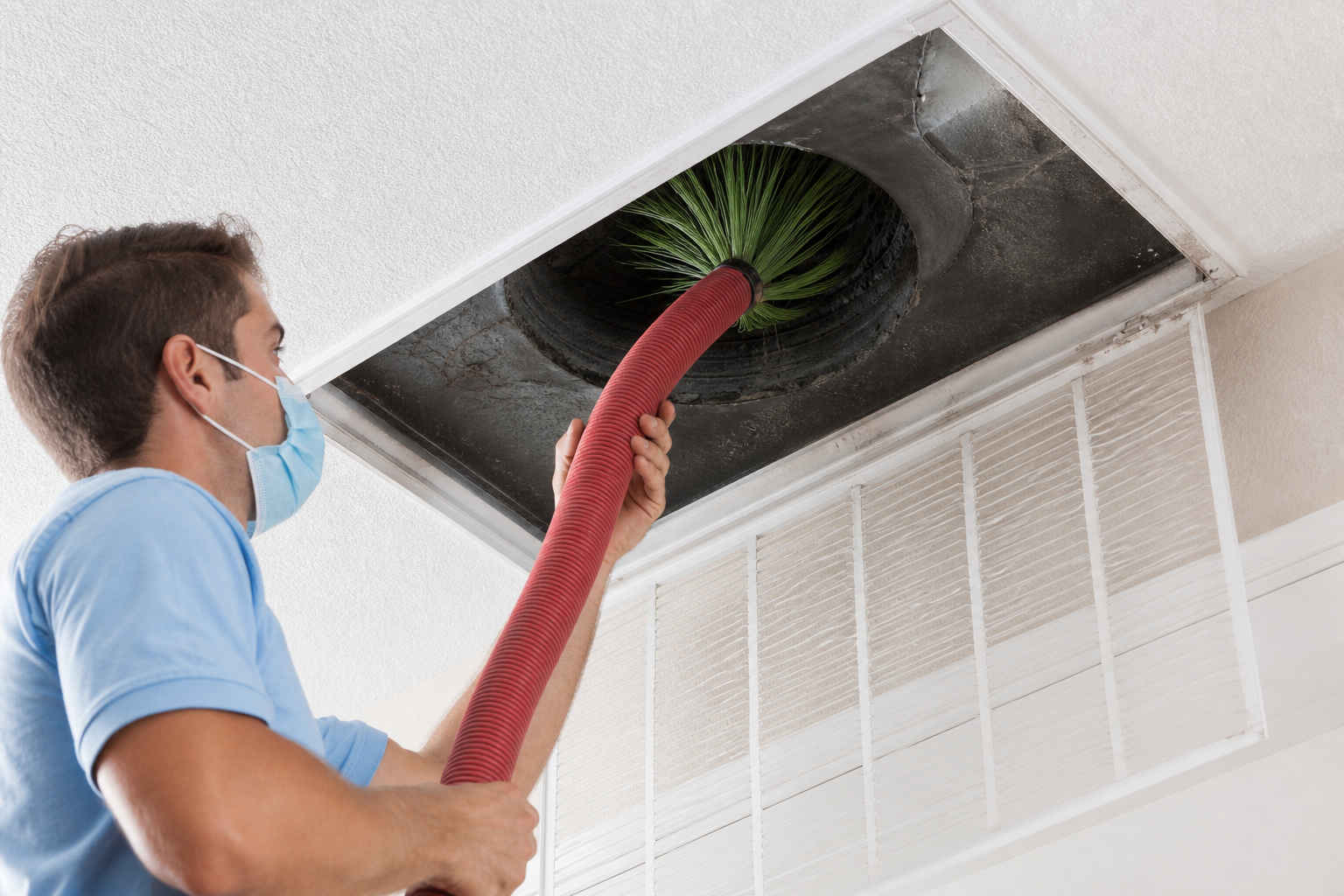
Top Signs You Need Air Duct Cleaning Service - Don’t Ignore These
The most reliable signs your air ducts need cleaning are physical and observable: visible dust blowing from vents, debris accumulation that returns within days of cleaning, pest evidence, or contamination after renovation. You don’t need a technician’s verbal assessment to spot these. If you’d rather not investigate yourself, call Bellows Air Duct & Vent Co. at (844) 685-6342 and we’ll walk you through it over the phone.
Here’s a hard truth we’ve learned in 42 years. A free inspection that always finds a problem isn’t an inspection - it’s a sales call. The model works because most homeowners can’t evaluate what they’re shown. A fuzzy photo of “mold” or a handful of dust pulled from a register looks alarming when you’re standing in your own hallway with a stranger holding a clipboard. The signs below are ones you can verify yourself, in your own time, without anyone standing over you.
The Return Vent Dust Test: Normal Settling vs. System Blowback
Dust happens. The question is where it comes from and how fast it comes back.
Normal household settling collects dust on flat surfaces over weeks. It drifts down and lands. What we’re looking for is different: a fine, even layer that appears on horizontal surfaces within a day or two of cleaning, or a visible puff of particulate when the system kicks on. Check your return vents specifically. These large, usually rectangular grilles sit low on walls or in hallways and pull air back toward your HVAC unit. If the slats and surrounding wall show a dark, fuzzy accumulation while the rest of the room stays cleaner, your system is recirculating debris rather than filtering it properly.
Here’s the test we tell Los Angeles homeowners to run. Clean a return vent thoroughly with a damp cloth, including the grille and the visible duct opening behind it. Wait 48 hours. If the buildup is substantial again, especially if you can wipe it away and your cloth comes back gray or black, that’s not ambient dust. That’s your ductwork delivering old debris back into your living space. In older Los Angeles neighborhoods like Eagle Rock or parts of the San Fernando Valley, we see this constantly in homes with original galvanized ductwork from the 1960s and 70s - the rough interior surface traps decades of accumulation.
The pattern matters too. Dust concentrated around supply vents (the smaller registers that blow conditioned air) suggests a problem upstream. Dust only near returns may mean your filter is failing or missing entirely.
Allergy Symptoms With a Telltale Timing Pattern
Los Angeles allergy seasons are real - olive and oak pollen in spring, grass through early summer, Santa Ana winds stirring everything up in fall. But HVAC-related symptoms follow a different clock.
Notice when congestion, headaches, or irritated eyes show up. Pollen allergies worsen outdoors and improve inside with windows closed. Duct-related reactions often intensify when the system runs, especially after it’s been off for hours. That morning stuffiness that clears by afternoon? Could be pollen. The throat irritation that starts exactly when the furnace kicks on at 6 AM? That’s worth investigating.
We’ve been in homes from Pasadena to Torrance where the homeowner’s “allergies” tracked precisely to HVAC cycles. One case in Mid-Wilshire stands out: a family of four, three members with new-onset respiratory irritation every autumn. Their physician suggested environmental testing. We found a filter that hadn’t been changed in 14 months and ductwork harboring construction debris from a 2019 kitchen remodel. The debris wasn’t visible at the vents - it was trapped in the trunk line, breaking loose in fragments when airflow resumed each heating season.
If your symptoms are year-round, worse in specific rooms, or correlate with system runtime rather than outdoor pollen counts, your ducts are a legitimate suspect.
Post-Renovation Contamination: Objective, Not Subjective
Drywall dust in ductwork isn’t a judgment call. It’s a documented condition with specific visual signatures.
After any construction involving cutting, sanding, or demolition, fine particulate enters the air. If your HVAC was running during or shortly after the work, that dust traveled. What you’ll see: a pale, chalky film on vent surfaces, often with a slightly gritty texture unlike ordinary household dust. It may feel almost slippery when wiped. In supply vents, look for accumulation in the corners where airflow is slowest - drywall dust is heavy enough to settle there while lighter dust continues moving.
The health concern isn’t the dust itself but what it carries. Drywall compound contains silica and other irritants. Left in ducts, it becomes a reservoir that releases with every cycle. We cleaned a system in Silver Lake last year where the homeowner had endured two years of intermittent respiratory issues after a bathroom renovation. Three contractors had inspected; none had checked the ductwork. The camera inspection showed a half-inch layer of compacted drywall compound in the main trunk. It was white, uniform, and unmistakably construction material - not “maybe mold,” not “could be dust,” but a clear foreign contaminant with a known entry point.
If your home was renovated in the last five years and you didn’t have ducts cleaned afterward, this check is worth your time.
Pest Evidence: The Checklist Homeowners Miss
Rodents and insects use ductwork as highway, nest site, and unfortunately, latrine. The signs are specific and, once you know them, easy to spot.
Check for these at your vents:
- Droppings near or on vent covers, especially returns where animals enter seeking warmth or airflow. Mouse droppings are rice-grain sized and pointed; rat droppings are larger, capsule-shaped.
- Gnawed or disturbed insulation visible at return openings. Fiberglass duct liner with ragged edges, compressed patches, or scattered loose material suggests nesting activity.
- Unexplained odors that intensify when the system runs. A musty or ammonia smell that arrives with airflow and fades when it stops almost always indicates biological contamination in the duct path.
- Sudden increase in insect activity near vents, particularly silverfish, roaches, or ants that appear seasonally inconsistent.
In Los Angeles, roof rats are the most common duct intruder, especially in hillside neighborhoods from Los Feliz to Pacific Palisades where mature trees provide access. They enter through gaps in exterior duct connections, damaged vent screens, or sometimes through the attic. Once inside, they travel the full system. We’ve pulled nests from trunk lines that contained years of accumulated debris - shredded insulation, food storage, and droppings compacted into a solid mass.
The smell test is the most reliable early indicator. If your home develops an odor you can’t locate, and it strengthens predictably with HVAC operation, call for a camera inspection before calling a pest company. Extermination without duct cleaning leaves the contamination in place.
When a Recent HVAC Service Didn’t Fix the Problem
This scenario is more common than you’d think, and it’s a legitimate reason to inspect ductwork.
You called for heating or cooling trouble. The technician serviced the unit - new capacitor, charged refrigerant, replaced ignitor - and the mechanical problem resolved. But you’re still uncomfortable. Uneven temperatures persist. Certain rooms never feel right. The air seems stale. The technician’s work was correct; the problem was upstream or downstream of what they were hired to fix.
Ductwork is the forgotten component in most service calls. A perfectly functioning furnace can’t deliver properly through obstructed, leaking, or contaminated ducts. Before your next HVAC service, document what you’re experiencing: which rooms, what times of day, what specific discomfort. After the service, if those conditions persist, bring that history to a duct cleaning company. A reputable outfit will listen rather than dismiss.
We offer free second opinions on any written estimate for this exact reason. If another company has already diagnosed your issue, we’ll review their findings without charge. Sometimes the answer is mechanical; sometimes it’s in the ducts. The history you provide helps us tell the difference before we set foot in your home.
Related services in Los Angeles: Air Duct Cleaning in Seymour, Dryer Vent Cleaning in Seymour, HVAC Cleaning in Seymour
When to Call a Pro
You’ve run the tests above and something checks out. Or you’ve found evidence you’re not equipped to evaluate. That’s the right time to call.
What we bring: camera inspection before and after every cleaning, so you see what we see. Equipment from Rotobrush and Nikro that matches what serious HVAC contractors specify. Upfront pricing disclosed before we start - the number on the phone is the number on the invoice. And our 90-Day Done Right Promise: if it’s not right, we make it right, no paperwork, no arguing.
Most jobs finish in a single visit. Our technicians are background-checked and uniformed, and a live person answers our phones 24 hours a day. We’ve been doing this since 1984, and we still answer our own calls.
If you’re in Los Angeles and seeing signs that concern you, call (844) 685-6342. We’ll talk through what you’ve found and schedule a camera inspection if it makes sense. Estimates are free, and we don’t believe in scare tactics or bait coupons.
The Bottom Line
The signs that matter are the ones you can verify yourself: dust that returns too fast, symptoms tied to system cycles, visible construction debris, pest evidence with specific characteristics, and comfort problems that outlast HVAC service. These aren’t mysterious conditions requiring a technician’s interpretation. They’re physical facts in your home, waiting for a homeowner who knows what to look for.
If you’re in Los Angeles and need help evaluating what you’ve found, Bellows Air Duct & Vent Co. offers free estimates - call (844) 685-6342. We’ll walk you through it honestly, show you what the camera sees, and quote one price before any work begins. That’s how we’ve operated for over 42 years.
Frequently Asked Questions
Every three to five years for most homes, sooner if you’ve had renovation, pest intrusion, or notice the signs above. Los Angeles’s dry climate and seasonal Santa Ana winds push more particulate into systems than coastal areas with higher humidity. Homes near construction zones or with frequent HVAC use may need more frequent attention. Call (844) 685-6342 for a free estimate - we’ll evaluate your specific conditions.
You can clean vent covers and the first few feet of visible duct with a vacuum and brush, but the trunk lines and branches that carry air throughout your home require professional equipment. Rotobrush and Nikro systems used by qualified technicians agitate and extract debris from the full system without damaging ductwork. More importantly, camera inspection before and after cleaning verifies results you can’t see from a vent opening. For a thorough job with documented outcomes, call (844) 685-6342.
Yes, if you have objective signs of contamination. Dust blowback, post-renovation debris, or pest evidence are maintenance issues that worsen over time, not just comfort concerns. Clean ducts also reduce strain on your HVAC system, which can extend equipment life. We provide upfront pricing before any work begins, and our $89 Seasonal Tune-Up includes a basic duct assessment if you’re unsure whether full cleaning is warranted. Call (844) 685-6342 to discuss.
Ask four questions before scheduling: Do you provide camera inspection before and after? Will you quote a firm price before starting work? What equipment brands do you use? What guarantee backs the job? Companies that hesitate on any of these points are often operating the low-quote model that escalates once inside. Bellows has used upfront pricing and camera verification for over 42 years, and our 90-Day Done Right Promise is non-negotiable. Call (844) 685-6342 and we’ll answer directly.
Written by the team at Bellows Air Duct & Vent Co., serving Los Angeles since 2012.
Need Air Duct Cleaning Help?
Call Bellows Air Duct & Vent Co. - licensed & insured, here with fast after-hours help in Los Angeles.
(844) 685-6342