
Musty Smell from the Vents
What’s Happening
A musty smell coming from your vents almost always means there is mold, mildew, or accumulated biological growth somewhere inside your duct system or on your HVAC equipment – and your blower is spreading it through every room every time the system runs. This is not a filter problem you can solve with a trip to the hardware store.
Ductwork runs through attics, crawl spaces, and wall cavities where temperatures swing and moisture collects. Over time, dust and debris build up on the inside of ducts and on your coil and drain pan. When humidity gets into that layer of buildup, it doesn’t take long for mold and mildew to take hold. The smell is the first sign most homeowners notice – and by the time it’s strong enough to catch your attention, the growth is usually well established. That’s not meant to alarm you. It’s just useful to know before you decide whether this can wait.
Why It Happens
Mold or Mildew Growth Inside the Duct Walls
This is the most common cause by a wide margin. Dust, pet dander, and skin cells coat the inside of sheet metal or flex duct over years of use. When humid air passes through – or when a small leak pulls in humid attic or crawl space air – that organic layer gets damp and mold spores settle in. You’ll recognize this as a smell that’s noticeably worse when the system first kicks on and then fades slightly as air circulates. If the odor is earthy and consistent across multiple rooms, the growth is probably spread through the main supply trunk, not isolated to one branch.
A Dirty or Frozen Evaporator Coil
Your evaporator coil sits inside the air handler and is designed to remove heat and humidity from the air. When it gets coated with dust – which happens when filters aren’t changed on schedule – moisture clings to that debris layer instead of draining cleanly. A frozen coil that thaws repeatedly makes this worse. If the musty smell comes with reduced airflow from your vents, or if you’ve noticed ice on the refrigerant lines near your indoor unit, the coil is likely part of the problem.
A Clogged or Overflowing Condensate Drain Pan
Every central air system has a drain pan under the evaporator coil to catch condensation. If the drain line clogs – and they do, especially in humid climates or in systems that run hard in summer – standing water sits in that pan and becomes a breeding ground for mold almost immediately. Pull the access panel on your air handler and look at the pan. If there’s visible water standing in it, or a dark ring showing where water has been sitting, that’s your source. This one is worth attending to quickly because an overflowing pan can also cause water damage to the surrounding structure.
Moisture Getting Into Flex Duct Through Gaps or Tears
Flex duct – the corrugated gray tubing used in many homes built after the 1970s – is insulated on the outside to prevent condensation on the inner liner. When that insulation is torn, compressed, or has simply degraded over decades, the liner sweats in humid conditions. Add any small gap at a collar connection, and you have humid unconditioned air mixing with dusty duct surfaces. If your home has flex duct in the attic and the musty smell is worse during stretches of hot, humid weather, this is a reasonable place to look. You can sometimes spot daylight around collar connections by cutting attic access, but leave any actual work to a technician – attic spaces present real fall and heat hazards.
What to Do Right Now
- Check your air filter and replace it if it’s gray or clogged. A blocked filter restricts airflow and keeps the coil wet longer than it should be. This won’t solve the underlying problem, but it stops conditions from getting worse before your technician arrives.
- Look at your condensate drain pan. Open the access panel on your indoor air handler – it usually unlatches or has a few screws. If you see standing water, turn the system to “Fan Only” or shut it off entirely and call us. Do not attempt to clear the drain line with compressed air unless you’re certain where the line terminates; pushing a clog the wrong way can create a bigger problem.
- Note which vents smell worst and at what time of day. Take a few notes or a short video on your phone. This kind of observation takes a technician straight to the most affected zone and saves time during the visit.
- Don’t run air fresheners or plug-in scents to mask it. Masking the smell makes accurate diagnosis harder and doesn’t address what’s growing. If you have household members with asthma, allergies, or respiratory conditions, consider running the system less until it’s been inspected.
- Leave duct registers, air handler panels, and attic hatches to the technician. There’s nothing wrong with looking – but do not attempt to reach into ductwork, clean a coil, or access refrigerant components yourself. The coil operates at pressures that can cause serious injury, and attic ductwork work involves both heat hazard and fall risk. The right move is to document what you can see from a safe position and let a trained technician handle the rest.
How We Fix It
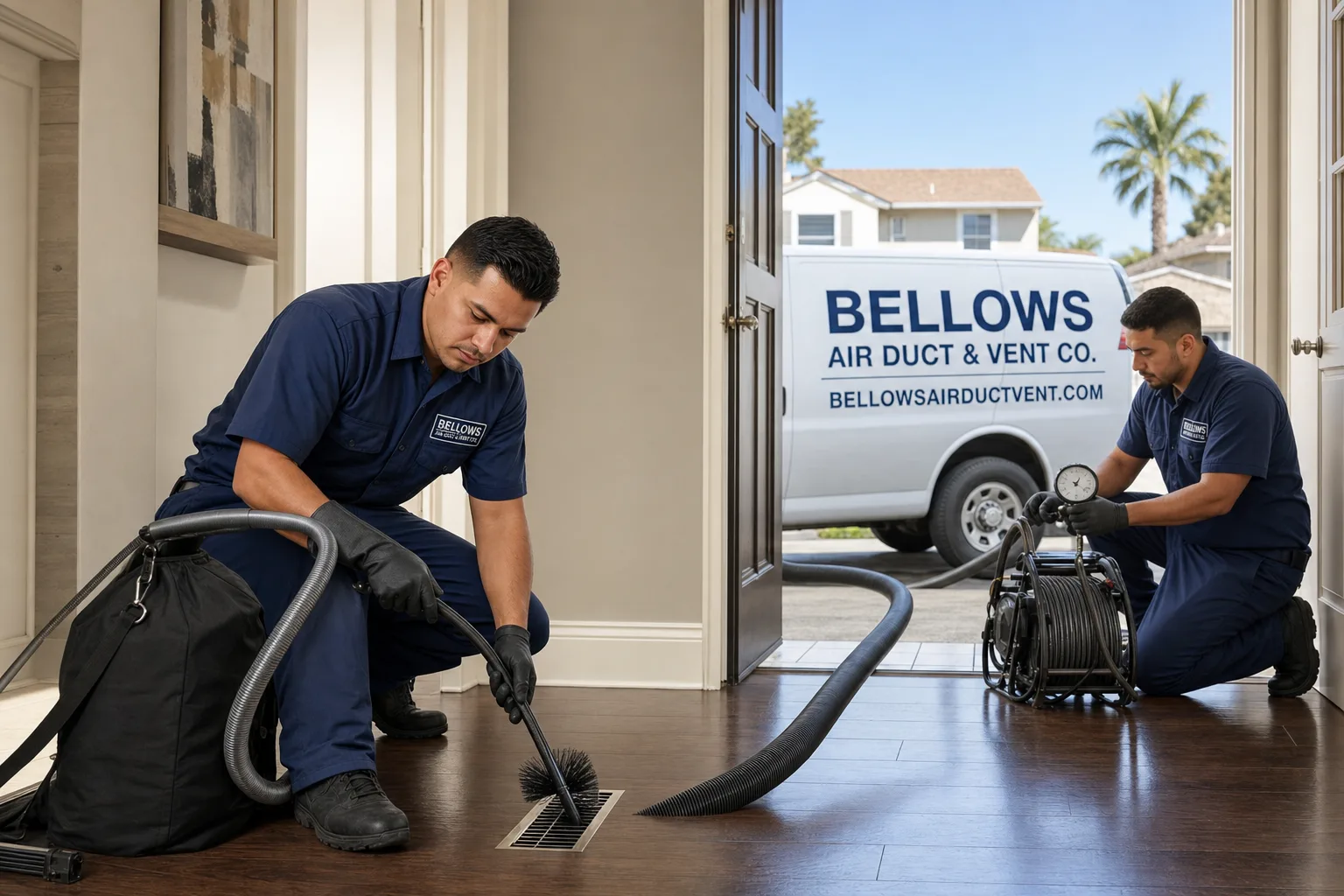
When your local Bellows Air Duct & Vent Co. team arrives, the first thing they do is a camera inspection of the duct system – before a single tool goes in. That gives you a visual record of what’s actually there, not just a technician’s word for it. From there, the path depends on what the camera shows.
If the problem is buildup inside the ducts, the service is a full air duct cleaning using professional-grade equipment from Rotobrush and Nikro – the same brands serious HVAC contractors specify. Every register, every branch, every collar. When biological growth is present, air quality and sanitizing treatment is applied after the clean so the surfaces aren’t just clear of debris but treated against regrowth.
If the camera shows a torn flex run, a gap at a collar, or a connection that has failed, duct repair and sealing addresses that in the same visit. Most jobs are completed in a single visit.
Pricing is presented in writing before work begins – no surprises on the bill, no numbers that change at the door. That’s how we’ve operated since 1984, and the 90-Day Done Right Promise backs every job: if it’s not right, we come back, no paperwork, no arguing. All pricing comes from a free written estimate specific to your home.
Frequently Asked Questions
It depends on how long it’s been there and who’s in the house. Mold circulating through a forced-air system is a real health concern – especially for anyone with asthma, allergies, or a compromised immune system – and it won’t get better on its own. A system that’s been running with mold growth for weeks or months has spread spores to every room it serves. We wouldn’t treat this as urgent the way we would a gas smell or a carbon monoxide alarm, but it is not something to set aside for the next slow weekend. Call (844) 685-6342 and get eyes on it soon.
Call us and ask – our line is answered by a live person, 24 hours a day, 7 days a week, not a voicemail. Your local Bellows team will tell you directly what’s available and get you scheduled. Dial (844) 685-6342 and someone will pick up.
A thorough cleaning paired with sanitizing treatment addresses the source – the organic buildup that mold and mildew are growing on. If the moisture condition that created it is also corrected (a cleared drain line, a repaired duct gap, a coil that’s clean and draining properly), the smell doesn’t return. If you only mask it with a deodorizer or replace the filter, you’re running the same air over the same growth. The camera-before-and-after process we use means you can see what changed, not just take our word for it.
Often it’s both, and the camera inspection sorts it out on arrival. A technician who’s looked at the ductwork, the coil access, and the drain pan can tell you specifically what’s contributing to the smell and what needs to happen. You’ll have that in writing, with a price, before work begins. If you’ve already received a written estimate from someone else and want a second set of eyes on it, we offer a free second opinion on any written estimate – no obligation.
Get It Fixed
Your local Bellows Air Duct & Vent Co. team is ready to take a look. Call (844) 685-6342 – a live person answers around the clock – or book online. We’ll inspect the system with a camera, tell you exactly what we find, and give you a written price before anything starts. No surprises.
Written by Ray Castillo, Owner at Bellows Air Duct & Vent Co., proudly serving local communities since 1984.