
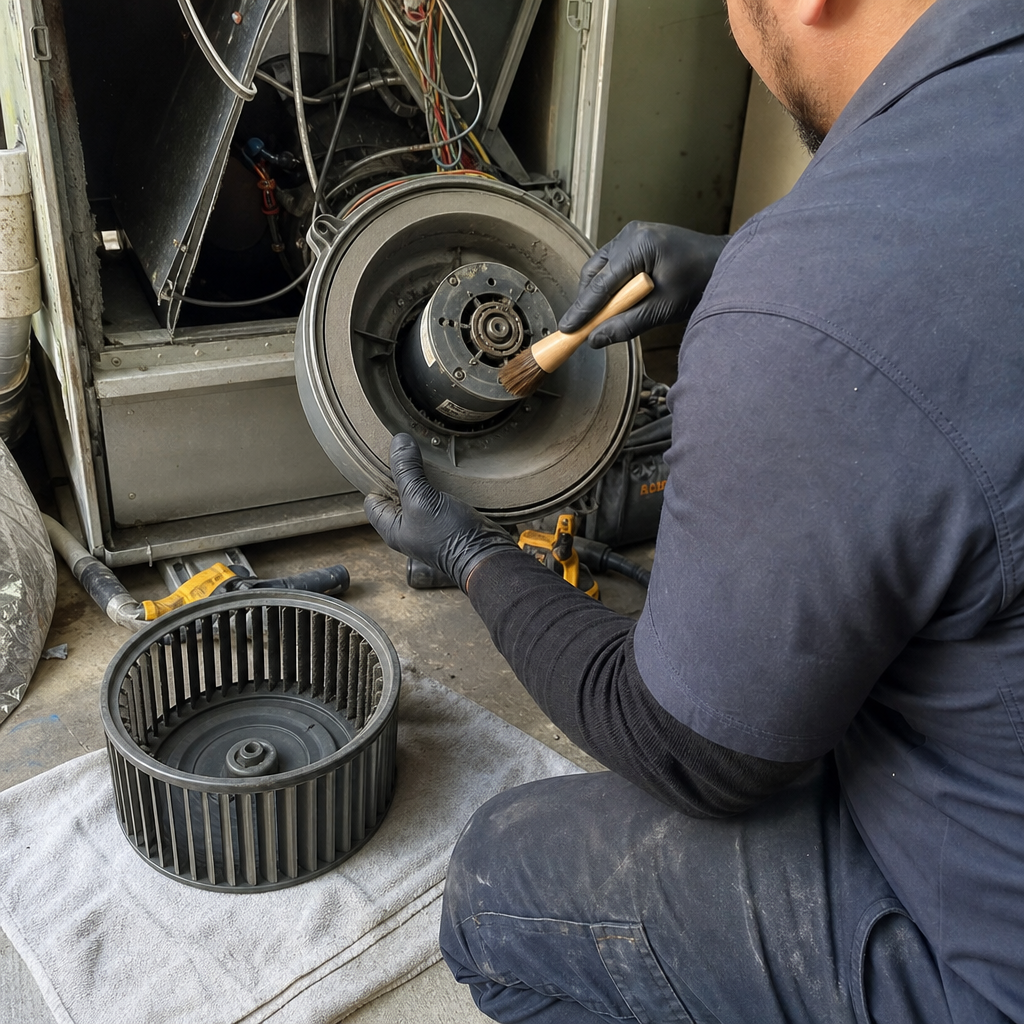
Last updated July 25, 2026
The Complete Dryer Vent Cleaning Guide for Los Angeles Homeowners
The U.S. Fire Administration attributes roughly 2,900 home dryer fires annually to failure to clean - a number that has barely moved in 20 years because the cleaning itself remains widely misunderstood. Most Los Angeles homeowners believe they’re protected because they empty the lint trap after every load. They’re not. In this guide, you’ll learn how dryer vent fires actually start, why lint trap cleaning and vent line cleaning are entirely different tasks, how your home’s vent routing affects your risk, and when cleaning is no longer enough. This is safety protocol, not housekeeping.
Quick Answer
Dryer vent cleaning is the complete removal of lint buildup from the entire vent line - the hidden duct running from your dryer to the exterior cap - not just the lint trap. A proper cleaning prevents the heat buildup that causes roughly 2,900 home fires annually, extends dryer life, and typically pays for itself in energy savings within 12 months. Los Angeles homeowners with vents longer than 15 feet, multiple bends, or flexible foil ducting should schedule professional cleaning annually; those with short, straight, rigid metal vents may safely extend to every 18-24 months.
Table of Contents
- How Dryer Vent Fires Start: The Ignition Sequence
- Lint Trap Cleaning vs. Vent Line Cleaning: Why One Cannot Replace the Other
- How Vent Length, Routing, and Material Affect Your Risk
- What a Complete Professional Cleaning Includes
- When Cleaning Is Not Enough: Signs Your Vent Line Needs Replacement
- What Homeowners Can Safely Do vs. What Requires a Professional
- What Dryer Vent Cleaning Costs in Los Angeles
- Building Your Maintenance Schedule
How Dryer Vent Fires Start: The Ignition Sequence
Dryer vent fires are classified by fire officials as a home fire cause, not an appliance malfunction. This distinction matters because it places responsibility on the homeowner for maintenance, not the manufacturer for design. Understanding exactly how these fires start makes prevention straightforward.
Here’s the sequence in plain terms:
- Lint escapes the trap. Even a clean lint trap allows fine particles through. Over months, this material coats the interior walls of your vent line.
- Airflow restriction builds. Lint accumulation narrows the duct. Your dryer works harder, runs longer, and generates more heat to push air through a shrinking passage.
- Heat concentrates. Restricted airflow cannot carry heat away efficiently. Duct temperatures rise, particularly at bends and sag points where lint collects most densely.
- Ignition occurs. Lint is highly combustible. At sustained elevated temperatures, it ignites. The fire then travels the duct path, often entering wall cavities before detection.
The entire process is predictable and preventable. The lint trap catches perhaps 60-70% of debris; the remainder is why vent lines exist and why they require periodic cleaning.
In Los Angeles, we see additional risk factors. Extended dry seasons mean static electricity buildup, which can accelerate lint migration. Homes in hillside neighborhoods like Laurel Canyon or the Hollywood Hills often have longer vent runs to reach exterior walls, compounding airflow challenges. And many older homes in neighborhoods like Highland Park or Eagle Rock still have original flexible foil ducting installed decades ago, before current safety standards.
The U.S. Fire Administration data shows failure to clean as the leading factor in these fires. Not electrical fault. Not gas leak. Not manufacturer defect. Failure to clean. That classification is deliberate, and it means the prevention is equally deliberate.
Lint Trap Cleaning vs. Vent Line Cleaning: Why One Cannot Replace the Other
We encounter this confusion regularly. A homeowner insists their vent is fine because they clean the lint trap religiously. We then camera-inspect their vent line and find significant blockage. The two tasks serve different purposes at different points in the system.
Lint trap cleaning addresses the screen located at the dryer door or top panel. It catches the bulk of lint and fiber during the drying cycle. This is user maintenance, performed every load or two, and it protects the dryer’s internal components and provides modest fire risk reduction.
Vent line cleaning addresses the concealed duct running from the dryer’s rear connection through walls, ceilings, or crawl spaces to the exterior termination cap. This is where the remaining lint accumulates, where airflow restriction develops, and where fires originate. No lint trap cleaning reaches this space.
Think of it this way: cleaning your sink strainer does not clean your drain pipes. Both matter, but they are not interchangeable.
The consequences of confusing the two are measurable. A dryer with a blocked vent line can take 50-75% longer to dry a load, increasing energy costs and mechanical wear. The heating element cycles more frequently. Bearings and belts work harder. We’ve replaced dryers in Los Angeles homes that were less than five years old because the vent line had never been cleaned, forcing the appliance into premature failure.
Your lint trap takes thirty seconds and requires no tools. Your vent line requires specialized equipment and access to concealed spaces. Understanding this distinction is the first step in proper maintenance.
How Vent Length, Routing, and Material Affect Your Risk
Not all vent installations carry equal risk. Three factors - length, routing complexity, and duct material - determine how quickly lint accumulates and how difficult cleaning becomes.
Vent Length
Building codes generally limit dryer vent length to 25 feet from dryer to exterior cap, with deductions for each 90-degree bend. In practice, shorter is always better. A 10-foot straight run maintains strong airflow that carries lint efficiently. A 35-foot run with multiple bends, common in multi-story Los Angeles homes or apartments with central laundry locations, struggles to move lint even when the duct is clean. These installations require more frequent cleaning - annually at minimum, sometimes more often with heavy use.
Routing Complexity
Each bend creates resistance and a collection point. A straight vertical run through a roof cap performs better than a horizontal run with three direction changes. We frequently find Los Angeles homes, particularly 1960s-1980s construction in the San Fernando Valley, with vents routed through attics with multiple bends to reach distant exterior walls. These configurations are inherently higher-maintenance and often benefit from rerouting during replacement.
Duct Material
This is where we find the most significant safety variations:
- Rigid metal ducting (aluminum or galvanized steel): Smooth interior walls, fire-resistant, maintains shape. This is current code standard and the only material we install. Cleaning is effective and complete.
- Flexible foil ducting: Corrugated interior traps lint, easily crushed or kinked, combustible. Common in older installations and still sold in hardware stores despite known risks. We replace this material on sight; cleaning alone is insufficient.
- Flexible plastic or vinyl ducting: Combustible, prone to sagging, prohibited by most codes. Immediate replacement recommended.
- Semi-rigid aluminum flex: Better than foil or plastic but still corrugated. Acceptable only for short connection lengths between dryer and main duct, not for full runs.
Los Angeles building codes have evolved on this point. Pre-1990s installations often contain prohibited materials. During any service call, we inspect the full material type and document it with our camera system. Homeowners deserve to know what is concealed in their walls.
What a Complete Professional Cleaning Includes
The dryer vent cleaning market includes genuine technicians and superficial operators. Knowing what complete service looks like protects you from paying for a partial job that leaves risk in place.
Here is what a thorough cleaning should include:
- Pre-service camera inspection. The technician should show you the interior condition of your vent line before work begins. This establishes baseline and identifies damage, improper materials, or construction debris from original installation.
- Disconnection and protection. The dryer is carefully moved and disconnected. Flooring and surrounding surfaces are protected. We use corner guards and drop cloths as standard practice.
- Mechanical agitation and extraction. Professional equipment - we use Rotobrush and Nikro systems depending on duct configuration - loosens adhered lint and extracts it with high-velocity vacuum. The brush system contacts all interior surfaces, not just the centerline.
- Exterior cap inspection and cleaning. The termination cap is removed, inspected for damage, and cleared of lint, debris, and external obstructions. Bird nests, particularly in Los Angeles hillside homes, are a common finding. The cap’s flapper or louvers must operate freely.
- Post-service camera verification. The interior is re-inspected and documented. You should see the difference. This is your proof of completed work, not a verbal assurance.
- Reconnection, testing, and airflow measurement. The dryer is reconnected, leveled, and tested. Airflow at the exterior cap is measured to confirm unrestricted performance.
- Clean the lint trap after every load, and periodically wash it with mild detergent to remove invisible residue from dryer sheets
- Visually inspect the exterior cap monthly for obvious blockage, damage, or failed louvers
- Ensure the dryer maintains 4-6 inches clearance from the wall to prevent duct compression
- Check that the dryer connection hose behind the unit is not kinked or crushed when the appliance is pushed into position
- Monitor drying times; significant increase indicates developing blockage
- Any work involving the concealed vent line in walls, ceilings, or attics
- Cleaning beyond the first few feet from the dryer connection
- Exterior cap removal and cleaning on multi-story homes
- Camera inspection to assess interior condition
- Airflow testing to verify system performance
- Replacement of ducting material or rerouting
- Vent exceeds 15 feet or has more than one bend
- Flexible foil or semi-rigid ducting is present
- Dryer sees daily or near-daily use
- Home has multiple residents generating substantial laundry volume
- Exterior cap is subject to debris accumulation (near trees, hillside settings, coastal exposure)
- Short, straight rigid metal ducting (under 15 feet)
- Moderate use (3-4 loads weekly)
- Clear exterior cap location with minimal debris exposure
- Previous camera inspection confirmed minimal accumulation
- Drying times have increased noticeably
- Exterior flap does not open during dryer operation
- Burning smell during dryer use
- Visible lint accumulation around exterior cap or dryer connection
- It has been more than 24 months since any professional service
The specific question to ask any prospective service provider: “Do you camera-inspect before and after, and do you clean the exterior cap and verify airflow?” A technician who hesitates on any point is not performing complete service.
At Bellows Air Duct & Vent Co. home, camera verification is non-negotiable on every job. We’ve documented vent lines that “other services” claimed to have cleaned, still containing substantial blockage. Visual proof eliminates dispute.
When Cleaning Is Not Enough: Signs Your Vent Line Needs Replacement
Cleaning restores function to a sound duct. It cannot repair a duct that was improperly installed, has degraded, or was constructed from unsafe materials. Recognizing when replacement is required prevents repeated service calls for a fundamentally flawed system.
Crushed or damaged flexible duct: Flexible foil or semi-rigid ducting that has been crushed against walls, compressed by storage items, or damaged by rodents cannot be restored. The corrugations are permanently deformed, creating permanent blockage points. Replacement with rigid metal ducting is the only proper solution.
Sag points in horizontal runs: Ducting must maintain proper pitch, typically sloping back slightly toward the dryer or maintaining level with adequate support. Sagging creates low points where moisture and lint collect, accelerating blockage and creating mold risk. We’ve found sagging ducts in Los Angeles crawl spaces where supports have failed or were never installed to code.
Incorrectly pitched runs: Ducting that rises and falls, or that terminates lower than mid-run, creates permanent collection points. No cleaning removes the geometry problem. Rerouting to maintain consistent pitch is required.
Excessive length or bends: Sometimes the original installation was simply poor design. A vent that exceeds 25 feet, makes four direction changes, or terminates in a location that invites blockage may need complete redesign. This is common in Los Angeles garage conversions and additions where the original vent was extended rather than properly rerouted.
Prohibited materials: Any remaining plastic, vinyl, or foil ducting in a concealed space should be replaced regardless of current apparent condition. The risk profile of these materials is well-established.
During our inspections, we document these conditions and provide straightforward recommendations. If cleaning alone is insufficient, we say so. Our Dryer Vent Cleaning in Seymour standards apply equally here - no service is performed if it cannot be done right.
What Homeowners Can Safely Do vs. What Requires a Professional
There is legitimate homeowner maintenance, and there is work that requires training and equipment. Understanding the boundary protects both safety and your dryer’s warranty.
Homeowner-appropriate tasks:
Tasks requiring professional service:
The tools for DIY vent cleaning sold in hardware stores - typically brush kits on flexible rods - have significant limitations. They lack extraction capability, often compacting lint rather than removing it. In our experience, these tools are most useful for very short, straight, accessible runs, and even then they leave substantial material behind. For the typical Los Angeles home with 15-25 feet of concealed ducting, they are inadequate and potentially misleading, creating false confidence in a still-blocked system.
What Dryer Vent Cleaning Costs in Los Angeles
Pricing in the Los Angeles market varies based on accessibility, vent configuration, and service completeness. Below are typical ranges for professional service:
| Service Component | Typical Range |
|---|---|
| Standard dryer vent cleaning (single-family, accessible) | $125 - $225 |
| Multi-story or roof-vent access | $175 - $300 |
| Vent line replacement (rigid metal, standard length) | $350 - $650 |
| Exterior cap replacement | $75 - $150 |
| Camera inspection as standalone service | $85 - $125 |
Be cautious of advertised prices below $75. These are typically entry points for upsell operations that discover “unexpected problems” at the door. The bait-and-switch model is unfortunately common in Los Angeles, particularly from services that advertise through coupon mailers and online discount platforms.
Our approach at Bellows Air Duct & Vent Co. is straightforward: no-hassle upfront pricing disclosed before work begins. The number on the phone is the number on the invoice. We also offer a permanent 5% Senior and Veteran discount, and our $89 Seasonal Tune-Up includes dryer vent airflow verification as part of broader HVAC system care.
Building Your Maintenance Schedule
Frequency depends on your specific installation and usage patterns. Use this framework:
Annual cleaning recommended if:
18-24 month interval acceptable if:
Immediate service warranted if:
Los Angeles homeowners in specific situations should adjust: coastal properties in Marina del Rey or Playa del Rey experience salt air corrosion that can accelerate exterior cap deterioration. Canyon homes face wildlife intrusion risks. Historic properties may contain decades of accumulated installation layers requiring assessment.
Common Mistakes to Avoid
- Assuming lint trap cleaning is sufficient. This is the most dangerous misconception. The trap catches visible lint; the vent line accumulates the fine particles that pass through, and this is where fires start.
- Using flexible foil ducting for concealed runs. Sold in hardware stores, prohibited by code for concealed spaces, and a known fire risk. Replace with rigid metal regardless of apparent condition.
- Ignoring increased drying times. A load that previously took 45 minutes now taking 75 minutes is not “the dryer getting old.” It is blockage developing, and it will worsen.
- Hiring based on lowest advertised price. Los Angeles markets are saturated with coupon services that perform superficial work or pivot to high-pressure upsells. Verify what is included before booking.
- Neglecting the exterior cap. Bird nests, wasp nests, and accumulated debris at the termination point create blockage even when interior ducting is clean. Complete service includes this inspection.
- Attempting concealed duct work without proper equipment. Brush kits without extraction capability compact lint. Disassembly without knowledge of building construction risks damage.
- Deferring service in rental properties. Landlords often assume tenants will report problems. Tenants rarely notice gradual drying time increases. Schedule periodic inspection regardless of occupancy reports.
When to Call a Professional
Call when drying times increase, when annual service is due, or when you cannot verify your vent line’s condition through visual inspection of accessible portions. Call immediately if you detect burning odors, if the exterior cap does not open during operation, or if your installation contains flexible foil or plastic ducting in any concealed space.
Multi-story homes, roof-vented systems, and installations with complex routing require professional equipment and safety practices for access alone. The cost of service is modest compared to fire damage, appliance replacement, or energy waste from inefficient operation.
Bellows Air Duct & Vent Co. offers free estimates in Los Angeles - call (844) 685-6342. We’ll camera-inspect your system, show you exactly what we find, and provide upfront pricing before any work begins. Most jobs are completed in a single visit by background-checked, uniformed technicians. Our 90-Day Done Right Promise means if the work is not right, we return at no charge with no paperwork required.
Frequently Asked Questions
Most Los Angeles homeowners should schedule professional dryer vent cleaning annually, particularly if the vent run exceeds 15 feet, contains bends, or uses flexible ducting. Homes with short, straight rigid metal vents and moderate use may extend to 18-24 months. Annual service is strongly recommended for properties near the coast, in canyon areas with wildlife exposure, or with heavy daily dryer use. Call (844) 685-6342 to discuss your specific installation and we’ll recommend an appropriate interval.
Dryer vent cleaning addresses only the exhaust duct for your clothes dryer, removing lint buildup that creates fire risk and inefficiency. Air duct cleaning addresses the HVAC distribution system that heats and cools your home, removing dust, debris, and allergens from supply and return ducts. They are separate systems requiring separate service, though both benefit from camera-verified cleaning. Air Duct Cleaning in Seymour follows similar verification standards.
Homeowners can and should clean the lint trap after every load and inspect the exterior cap monthly. However, the concealed vent line in walls, ceilings, or attics requires professional equipment for thorough cleaning and extraction. Hardware store brush kits lack vacuum extraction and often compact lint rather than remove it. For the typical Los Angeles home with concealed ducting, professional service is the only complete solution.
Replacement is required when the duct contains prohibited materials (plastic, vinyl, or flexible foil in concealed spaces), has been crushed or kinked, contains sag points or incorrect pitch that create permanent collection areas, or exceeds safe length and bend configurations. Our camera inspection identifies these conditions definitively. Cleaning a fundamentally flawed system provides false confidence and leaves risk in place.
Yes. A blocked vent forces your dryer to run 50-75% longer to achieve the same result. At Los Angeles electricity rates, this typically adds $15-25 monthly to operating costs. Professional cleaning, which generally costs $125-225, typically pays for itself in energy savings within 8-12 months. The calculation does not include extended appliance life or avoided fire damage.
Ask four specific questions: Do you camera-inspect before and after cleaning? Do you clean and verify the exterior termination cap? Do you measure airflow to confirm performance? Is the quoted price the complete price, or are there potential additional charges? A qualified service answers all four without hesitation. Be wary of prices below $75 or services that cannot describe their complete process.
The Bottom Line
Dryer vent cleaning is safety protocol, not optional maintenance. The fire risk is real, well-documented, and entirely preventable with proper attention to the concealed vent line - not just the visible lint trap. Your installation’s length, routing, and material type determine both your risk level and your appropriate service interval. Complete professional cleaning includes camera verification, exterior cap service, and airflow confirmation. When cleaning cannot address fundamental installation flaws, replacement with rigid metal ducting is the only responsible course. Los Angeles homeowners who treat this as the safety matter it is, with annual professional service and informed hiring, eliminate a preventable hazard that has persisted unchanged for two decades.
Ready to have your system properly inspected and cleaned? Call Bellows Air Duct & Vent Co. at (844) 685-6342 for a free estimate. We’ll show you exactly what your vent line contains, provide upfront pricing before any work begins, and back our service with the 90-Day Done Right Promise - in writing, no arguing, no paperwork if something needs attention. We’ve been serving homeowners since 1984, and we pick up the phone 24 hours a day.
Written by the team at Bellows Air Duct & Vent Co., serving Los Angeles since 2012.