
Last updated July 25, 2026
DIY vs Professional Dryer Vent Cleaning: What’s Safe to Do Yourself
A dryer vent brush kit from a hardware store will clean a straight 6-foot run to an exterior wall just fine. It will also push a compacted lint clog deeper into a 25-foot run with two elbows, making the eventual professional cleaning harder and more expensive. In our 42 years serving Los Angeles homeowners, we’ve seen both outcomes - and the difference comes down to vent geometry, not how handy you are with a drill. This guide will show you exactly which configurations you can handle yourself, which ones require professional equipment, and how to tell the difference before you start.
Quick Answer
You can safely clean your own dryer vent if it’s a short straight run of rigid metal duct with an accessible exterior termination - typically under 10 feet with no bends. For longer runs, multiple elbows, roof terminations, or any flexible vinyl or foil duct, professional cleaning with rotary equipment and camera verification is the safer choice. Every homeowner, regardless of vent configuration, should clean the lint trap monthly and inspect the exterior cap quarterly.
Table of Contents
- What DIY Dryer Vent Cleaning Actually Works
- Vent Configurations Where DIY Creates Risk
- What Professional Equipment Provides That Store Kits Cannot
- The DIY Tasks Every Los Angeles Homeowner Should Do
- How to Tell If a Previous Cleaning Was Actually Complete
- Common Mistakes to Avoid
- When to Call a Professional
- Frequently Asked Questions
What DIY Dryer Vent Cleaning Actually Works
The hardware store brush kit has its place. We’ve seen it work well in specific conditions that are more common in older Los Angeles neighborhoods like parts of Pasadena or Burbank, where some bungalows have laundry closets backing directly to an exterior wall.
Here’s the profile of a DIY-appropriate vent:
- Short straight run: Under 10 feet of duct, ideally 6 feet or less
- Rigid metal duct: Smooth-wall galvanized steel or aluminum, not flexible material
- Single termination point: Exterior wall cap at ground or first-floor level, reachable with a standard ladder
- No interior obstructions: No bird guards with fine mesh, no damaged sections, no sagging
- Accessible both ends: You can reach the duct opening at the dryer and the exterior cap without removing permanent fixtures
In these conditions, a basic rotary brush kit attached to a cordless drill can physically contact the full duct surface. The lint load is typically light because the short run doesn’t allow much accumulation, and any dislodged debris has a clear path out.
We still recommend a simple airflow check after you’re done. More on that in the evaluation section below.
One Los Angeles-specific note: many homes in the San Fernando Valley built between 1945 and 1970 have this exact short-run configuration. The dry climate here means lint is brittle and fractures easily, which actually helps DIY removal in straight runs. But that same brittleness means compacted clogs in longer runs become rock-hard, and a consumer brush will grind against them without breaking them free.
Vent Configurations Where DIY Creates Risk
This is where we see the most trouble. A homeowner buys a $25 brush kit, runs it in as far as it goes, and assumes the job is done. What they’ve actually done is packed lint tighter into the mid-duct or pushed it past an elbow where it forms a complete blockage.
Avoid DIY cleaning if your vent has any of these characteristics:
- Run length over 15 feet: Consumer kits rarely extend beyond 12 feet effectively, and torque drops significantly with each extension rod added
- More than one 90-degree elbow: Each elbow reduces brush contact and creates a lint collection point; two elbows mean you’re likely leaving debris behind
- Roof termination: Access requires proper fall protection and ladder technique; more importantly, the vertical drop and gravity loading create dense accumulations that consumer brushes cannot dislodge
- Flexible vinyl or foil duct: These tear under brush pressure, creating gaps that leak moist air into wall cavities - a hidden mold risk in Los Angeles’s occasional humid periods
- Interior sections behind finished walls or ceilings: If you cannot inspect the full run, you cannot verify the cleaning
- Bird guard or pest screen with fine mesh: These clog quickly and require removal for proper cleaning; improper reinstallation creates fire hazards
Los Angeles building codes have prohibited flexible vinyl duct for dryer vents since the 2000s, but we regularly encounter it in rental conversions and unpermitted additions, particularly in older neighborhoods east of downtown. If you discover vinyl or foil duct during any inspection, replacement with rigid metal duct is the correct next step, not cleaning.
The El Niño moisture patterns of recent Los Angeles winters have made us more cautious about partial cleanings. Lint that remains in a duct absorbs atmospheric humidity, compacts further, and becomes significantly harder to remove later. A DIY attempt that leaves 30% of the lint load is worse than no attempt at all in some conditions.
What Professional Equipment Provides That Store Kits Cannot
We use equipment from Nikro, Abatement Technologies, and other manufacturers that specify tools for the commercial HVAC market. The difference isn’t marketing - it’s mechanical capability that consumer products are not designed to replicate.
Here’s what professional-grade dryer vent cleaning equipment delivers:
- Variable-speed rotary systems: Our brushes spin at controlled RPMs with adjustable torque. Start too aggressive on a compacted clog and you pack it tighter; start too gentle and you polish the surface without breaking it free. Experience with the equipment matters as much as the equipment itself.
- Reverse-airflow clearing: This is the critical difference. We can apply vacuum suction from the exterior cap while brushing from the interior, or reverse the airflow entirely. This dual-direction capability means dislodged lint is immediately evacuated rather than pushed deeper. Consumer kits have no vacuum integration.
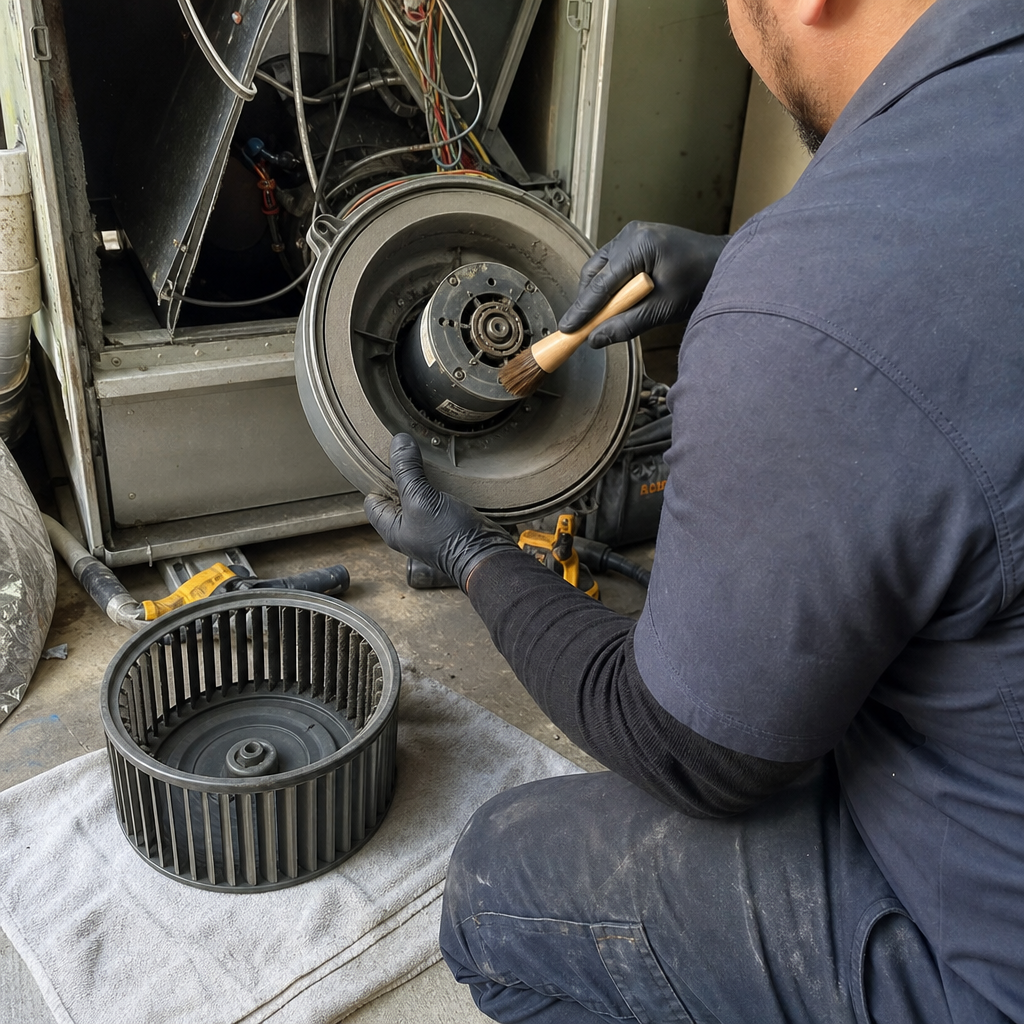
- Camera inspection before and after: Every job we complete includes visual documentation of the full duct length. You see what was there, and you see what’s left. This isn’t a claim - it’s a record. We’ve found bird nests, disconnected joints, and water damage that homeowners had no other way to detect.
- Proper negative air containment: Professional equipment captures dislodged debris rather than releasing it into the laundry room or wall cavity. Los Angeles homeowners with respiratory sensitivities - common given our air quality challenges - should consider this specifically.
- Mechanical agitation for hardened deposits: Years of accumulated lint, particularly in homes near the coast where salt air accelerates corrosion and lint adhesion, can form deposits that require pneumatic or whip-style agitation. No consumer brush kit provides this.
The dryer vent cleaning we provide follows the same protocol whether the home is in Seymour or Los Angeles: camera inspection, mechanical agitation as needed, reverse airflow clearing, and camera verification. The equipment is only part of it - the procedure ensures the result.
The DIY Tasks Every Los Angeles Homeowner Should Do
Regardless of your vent configuration, two maintenance tasks belong on your calendar. They prevent the majority of dryer fires and efficiency losses, and they require no special equipment.
Monthly: Clean the Lint Trap Properly
Most homeowners remove the visible lint and consider this done. The trap itself needs more attention.
- Remove the lint screen and peel off the visible accumulation
- Hold the screen under running water - if water pools on the mesh instead of passing through, detergent residue is blocking airflow
- Clean with a soft brush and mild dish soap, rinse thoroughly, and dry completely before reinstalling
- Once monthly, use a vacuum crevice tool to clean the lint trap housing cavity - lint bypasses the screen and packs into this space
- Check the felt or foam seal around the screen edge; if it’s deteriorating, replace the screen assembly
In Los Angeles, the hard water in many neighborhoods leaves mineral deposits on lint screens that accelerate clogging. If your water is particularly hard - common in the Valley and parts of the Westside - you may need to wash the screen more frequently.
Quarterly: Inspect the Exterior Cap
The exterior termination is your early warning system. This inspection takes five minutes and requires only a ladder for second-story caps.
- With the dryer running, verify that the flap or louvers open fully under airflow
- Check for lint accumulation on or around the cap - any visible buildup indicates incomplete evacuation
- Confirm the cap opens during dryer operation and closes when off; stuck-open caps admit pests and weather
- Look for damage: cracked flappers, missing screws, gaps between cap and siding
- Clear any visible lint with a soft brush - do not push it into the duct
Los Angeles’s Santa Ana wind events can damage exterior caps or drive fine debris into the duct. Inspect after any significant wind period, particularly if you’ve noticed longer dry times.
These two tasks, performed consistently, reduce professional cleaning frequency and catch developing problems early. They are genuinely effective DIY maintenance. They are not, however, a substitute for periodic professional cleaning of the full duct run.
How to Tell If a Previous Cleaning Was Actually Complete
Whether you DIY’d it or hired someone, you need objective checks to verify the job was finished. We’ve been called to homes where a “cleaning” left significant blockage because the technician or homeowner never verified results.
Perform these checks after any cleaning attempt:
The airflow check: Hold a strip of lightweight paper or a single tissue against the lint trap opening with the dryer running. It should pull firmly against the screen and stay in place. Weak or intermittent suction indicates partial blockage. We use calibrated anemometers on professional jobs, but the paper test gives homeowners a usable baseline.
The dry time observation: Time a standard medium load of towels or jeans from start to fully dry. A properly vented dryer in good condition should complete this in 35-45 minutes. Times extending past 55 minutes suggest remaining restriction. Los Angeles’s mild temperatures mean you’re not fighting extreme cold that extends dry times - persistently long cycles are almost always ventilation.
The temperature check: The dryer cabinet and the room should not feel unusually warm during operation. Excess heat means moist air is not evacuating efficiently.
The exterior observation: During a dry cycle, you should feel strong, warm airflow from the exterior cap. Weak flow, intermittent puffs, or no flow at all means the duct is still obstructed.
The lint pattern: After a week of normal use following cleaning, check the lint trap. A properly cleaned vent should produce consistent, light-to-moderate lint loading. Sudden heavy accumulation or unusual debris (bird nesting material, construction dust) indicates upstream problems.
We document all five metrics on our Bellows Air Duct & Vent Co. home service reports. If you’ve had a cleaning - ours or anyone’s - and these checks don’t pass, the job isn’t complete.
Common Mistakes to Avoid
- Using a leaf blower from the interior: The pressure can disconnect duct joints inside walls, particularly in older Los Angeles homes with taped rather than screwed connections. You won’t know until moisture damage appears.
- Running a brush without verifying duct material: Flexible duct tears under rotary pressure. We’ve replaced entire runs in Mid-City apartments where a well-meaning tenant destroyed the duct with a hardware store kit.
- Cleaning from only one end: Lint compacts directionally. Brushing from the dryer side alone pushes debris toward the exterior cap, where it jams. Professional cleaning addresses both directions.
- Ignoring the transition duct: The short connector between dryer and wall duct collects disproportionate lint. It’s often flexible and damaged. Check it separately, and replace if it’s foil or vinyl.
- Assuming visible lint at the cap means the duct is clear: Surface lint at the termination often masks a mid-duct clog. The exterior appearance is not a reliable indicator of interior condition.
- Using excessive extension rods: Each connection point reduces torque and increases binding risk in elbows. Consumer kits with 20 feet of rods often fail to rotate effectively past 12 feet.
- Skipping reassembly verification: A loose connection at the dryer or wall port leaks moist air into the structure. In Los Angeles’s older stucco construction, this trapped moisture damages framing before visible mold appears.
When to Call a Professional
Call for professional evaluation if your vent run exceeds 15 feet, has multiple elbows, terminates on the roof, contains any flexible material, or if your DIY attempt did not produce the verification results above. Same-day service matters when dry times have suddenly increased - that usually signals a near-complete blockage.
Bellows Air Duct & Vent Co. offers free estimates in Los Angeles. We’ll camera-inspect your full duct run, show you what we find, and quote one honest price before any work begins. If you mention this guide, we’ll apply our standard standing offers: $50 off any repair over $250, or our $89 Seasonal Tune-Up if your system needs maintenance rather than full cleaning. Background-checked, uniformed technicians; calls answered by a live person 24 hours a day. Call (844) 685-6342.
Frequently Asked Questions
Most single-family dryer vent cleanings in Los Angeles run between $150 and $300, depending on run length, accessibility, and whether repairs or guard replacements are needed. Multi-unit buildings and roof terminations typically cost more due to access requirements. Bellows provides upfront pricing before work begins - the number on the phone is the number on the invoice. Call (844) 685-6342 for a free estimate.
Annual professional cleaning is standard for most Los Angeles homes. Homes with heavy laundry volume, multiple residents, or longer vent runs benefit from inspection every 6-8 months. The quarterly exterior cap inspection and monthly lint trap cleaning you do yourself extends this interval and catches problems early.
A shop vacuum with a crevice tool can remove loose lint from accessible areas - the lint trap housing, the transition duct, and immediately inside the wall port. It cannot clean the full duct length effectively. Leaf blowers risk disconnecting joints and forcing lint deeper. Neither replaces proper rotary mechanical cleaning for the full run.
You likely packed lint tighter rather than removing it, or dislodged a partial clog that now forms a complete blockage past an elbow. This is the most common DIY outcome we correct. The brush contacted some debris, compressed it, and lost torque before clearing it. Professional reverse-airflow equipment extracts rather than compresses.
Yes. Los Angeles County fire departments respond to hundreds of dryer fires annually, and lint accumulation is the leading cause. Our dry climate makes lint highly combustible, and the extended dry season means heating elements and static discharge are active fire sources year-round. The risk is real and preventable.
If our cleaning does not resolve your dry time, temperature, or airflow concerns, we return at no charge with no paperwork required. The guarantee is stamped on every job. We’ve honored it since 1984 because we verify completion with camera inspection - we know the condition of your duct when we leave. That’s the difference between a claim and a promise backed in writing.
The Bottom Line
DIY dryer vent cleaning works in specific, limited conditions: short straight runs of rigid metal duct with accessible exterior terminations. For everything else - longer runs, elbows, roof exits, flexible materials, or any configuration you cannot fully inspect - professional equipment and verification prevent the common outcome of packed-in clogs and hidden damage.
Every homeowner should maintain the lint trap monthly and inspect the exterior cap quarterly. These tasks are genuinely effective, require no special tools, and catch problems before they become hazardous. They do not, however, replace periodic professional cleaning of the full duct system.
When you do hire a professional, demand camera verification of results and upfront pricing with no bait coupons. The air duct cleaning and HVAC cleaning disciplines follow the same standards: see the problem, fix the problem, prove it’s fixed. Anything less leaves you guessing.
Written by the team at Bellows Air Duct & Vent Co., serving Los Angeles since 2012.