
Last updated July 25, 2026
HVAC Cleaning Maintenance Schedule: What to Do and When
The three-to-five-year recommendation for professional duct cleaning is an industry average built around an average home. In Los Angeles, where many of us live in houses that have seen multiple owners, additions, and decades of seasonal Santa Ana winds pushing dust through every gap, the average home doesn’t exist. We’ve been inside enough Los Angeles County duct systems since 1984 to know that a 1960s ranch in the San Fernando Valley with original fiberglass flex duct and three indoor cats needs a radically different schedule than a 2015 build in Playa Vista with rigid metal trunk lines and no pets. This guide shows you how to build a maintenance calendar around your actual conditions, not a generic interval that serves a company’s booking goals.
Quick Answer
Most Los Angeles homes need professional air duct cleaning every 3 to 5 years, dryer vent cleaning annually, and monthly homeowner maintenance including filter changes and vent grille wiping. Homes with pets, allergy sufferers, recent renovations, or flexible ductwork older than 15 years should shorten professional intervals to 2 to 3 years. Your specific schedule depends on four factors we’ll detail below: household conditions, duct materials, local climate patterns, and your system’s documented baseline.
Table of Contents
- Why Average Schedules Fail in Real Homes
- Four Factors That Shorten or Lengthen Your Cleaning Interval
- Monthly Homeowner Maintenance: What You Can Safely Do
- Professional Services: Year-by-Year Timeline for Los Angeles Homes
- Documenting Your System’s Baseline
- Duct Cleaning and Dryer Vent Cleaning: Same Schedule or Different?
- Common Mistakes to Avoid
- When to Call a Professional
- Frequently Asked Questions
Why Average Schedules Fail in Real Homes
The National Air Duct Cleaners Association suggests cleaning every three to five years. That number assumes a single-family home with no pets, no smokers, no recent construction, standard disposable filters changed on schedule, and ductwork in good repair. We’ve never inspected a Los Angeles home that matched all six criteria.
Los Angeles County presents specific challenges the national average doesn’t capture. Our prolonged dry season, typically May through October, creates fine dust that infiltrates attic and crawl space duct runs. The Santa Ana wind events, especially October through January, pressurize homes and force particulate through every seam and register gap. Coastal neighborhoods from Santa Monica to San Pedro deal with salt air corrosion on metal fittings that flake into the airstream. Inland valleys, from the San Fernando Valley to the Inland Empire border, see wider temperature swings that flex and fatigue older flexible ductwork, increasing leakage points where dust enters.
A maintenance schedule that ignores these factors asks you to guess based on a national composite. The better approach: start with the standard interval, then adjust based on conditions that apply to your specific home. The sections below show you how.
Four Factors That Shorten or Lengthen Your Cleaning Interval
Four conditions should move your professional cleaning date earlier than the standard recommendation. We’ve listed them in order of impact, based on what our technicians document during camera inspections across Los Angeles County.
Pets and Pet Dander
Each dog or cat adds significant hair and dander load. Short-haired breeds shed less visibly but still produce dander that becomes airborne, passes through filters, and settles in ductwork. Homes with multiple pets, or breeds with dense undercoats suited to cooler climates, often need cleaning every 2 to 3 years rather than 3 to 5. We’ve pulled significant accumulations from homes in Los Angeles neighborhoods like Studio City and Los Felis where residents keep two or three rescue dogs. The dander doesn’t just sit there; it recirculates, degrading filter performance and coating evaporator coils.
Recent Renovation or Remodeling
Construction dust is fine, abrasive, and pervasive. Even with contractors who seal registers, drywall dust, sawdust, and insulation particles enter duct systems. We recommend professional cleaning within 6 months of any project that involves drywall sanding, flooring replacement, or wall demolition. In older Los Angeles homes, particularly pre-1978 builds, renovation may disturb legacy materials that require specialized handling. If your home predates modern building codes, mention this when scheduling. Our Air Duct Cleaning in Seymour and surrounding Los Angeles areas includes pre-cleaning camera inspection to assess what renovation debris actually entered your system, rather than assuming.
Allergy or Respiratory Conditions
Households with asthma, COPD, or significant seasonal allergies benefit from shorter intervals. The goal isn’t just cleanliness but reduced particulate load in the breathing zone. For these homes, we typically recommend 2-year professional cycles paired with upgraded filtration. The combination matters: clean ducts with standard filters recontaminate quickly; upgraded filters in dirty ducts strain the blower and bypass airflow.
Age and Type of Duct Material
Flexible ductwork, common in Los Angeles homes built 1960s through 1990s, has a shorter effective lifespan than rigid metal. The inner liner degrades, the insulation layer compresses, and the outer vapor barrier develops tears. Once flex duct passes 15 to 20 years, it sheds particulate into the airstream and becomes harder to clean thoroughly without damage. We inspect with cameras before committing to aggressive cleaning on older flex; sometimes partial replacement is the better service. Rigid metal duct, properly sealed, can last decades and responds well to mechanical cleaning with equipment like Rotobrush systems or Nikro vacuums.
Monthly Homeowner Maintenance: What You Can Safely Do
Some maintenance belongs to the homeowner. Some requires professional equipment and training. The line is clearer than many homeowners realize.
Monthly tasks you should handle:
- Check and replace filters. Mark your calendar. For standard 1-inch pleated filters in Los Angeles, every 60 to 90 days is typical during heavy use seasons. Homes near active construction, with multiple pets, or with allergy sufferers should check monthly. Use the filter’s MERV rating as guidance, not a contest: MERV 8 to 11 balances particle capture with airflow for most residential systems. Higher MERV filters in undersized ductwork strain blowers and crack heat exchangers.
- Wipe vent grilles and returns. Dust accumulates on the visible surfaces and becomes a reservoir that re-enters the airstream when the blower cycles on. A damp microfiber cloth, grilles removed if they pop off easily, takes five minutes per room.
- Listen to your system. New whistling, rattling, or blower strain often indicates filter blockage or duct leakage. Address it before it becomes a repair.
- Clear the outdoor condenser. In Los Angeles, where landscaping grows aggressively during wet winters, condenser coils need 24 inches of clearance. Check monthly during growing season.
What homeowners should not attempt:
- Inserting tools or vacuums into duct openings beyond the first few feet. You will not reach the trunk lines where accumulation concentrates, and you risk damaging flex duct or dislodging connections.
- Applying chemical sanitizers or sealants without professional assessment. Product labels and actual duct conditions often conflict.
- Cleaning evaporator coils or blower assemblies without proper training and containment. These components are easily damaged and improperly cleaned coils become mold substrates in our humid shoulder seasons.
Professional Services: Year-by-Year Timeline for Los Angeles Homes
This timeline assumes a typical Los Angeles four-season pattern: heating season November through March, cooling season May through October, shoulder months April and November with minimal system use. Adjust if your home uses heat pump systems year-round or if you run cooling into October during extended heat events.
Year 1: Establish Baseline
Schedule a full system inspection with camera documentation of trunk lines and major branches. This becomes your reference point. If you’ve just purchased the home, this is essential; you inherit whatever the previous owner neglected. Request the technician note duct material types, approximate age, visible contamination level, and any leakage points. Our HVAC Cleaning in Seymour and throughout Los Angeles includes this documentation as standard practice.
Year 2: Monitor and Maintain
Continue monthly homeowner tasks. If you have pets or allergies, schedule professional cleaning this year rather than waiting. Otherwise, continue monitoring. Check your documented baseline against current filter change frequency and any new odors or airflow reduction.
Year 3: Evaluate Cleaning Need
For average homes without compounding factors, this is the earliest professional cleaning window. Request camera inspection first; visible accumulation on trunk lines or blower assembly indicates cleaning is warranted. If the system is relatively clean, extend to Year 4 or 5, but update your documentation.
Year 4 to 5: Standard Cleaning Cycle
Most Los Angeles homes fall in this range. Combine duct cleaning with dryer vent cleaning for efficiency. Ask your technician to show before-and-after camera footage so you understand what was removed. This transparency is why we provide it on every job.
Beyond Year 5: Assess System Age
If your ductwork exceeds 25 years, cleaning may be partial solution and partial problem. Degraded flex duct doesn’t clean well; it tears. Consider whether duct repair, sealing, or targeted replacement should precede or accompany cleaning. Our technicians assess this during initial camera inspection and will recommend against cleaning if it risks damage.
Documenting Your System’s Baseline
The most overlooked step in HVAC maintenance is creating a record you can compare over time. Without it, you’re guessing whether conditions have changed.
Here’s what to document after your first professional inspection:
- Photograph every filter at change-out. Note date, runtime hours if your thermostat tracks them, and visible loading. Heavy loading in short intervals indicates duct leakage or high particulate source.
- Keep the camera inspection footage. Request a copy from your service provider. Store it with your home records. Next inspection, compare the same branch lines.
- Note seasonal patterns. Does dust accumulation spike after Santa Ana events? Do allergy symptoms worsen when switching from heating to cooling? These patterns reveal system behavior that generic schedules miss.
- Track energy bills against maintenance dates. Significant duct leakage or blower strain from dirty components increases consumption. Documented correlation justifies maintenance investment.
- Record any repairs or modifications. New equipment, duct modifications, or remediation work changes your baseline. Update your record.
In Los Angeles, where many homes have passed through multiple owners with no maintenance history, this documentation becomes particularly valuable. We’ve encountered homes in neighborhoods from Eagle Rock to Baldwin Hills where the current owner is the first to systematically track system condition. The difference in outcomes, and in repair costs avoided, is substantial.
Duct Cleaning and Dryer Vent Cleaning: Same Schedule or Different?
These services are often scheduled together for homeowner convenience, but they serve different safety and performance goals and should not automatically share the same interval.
Dryer vent cleaning is primarily a fire safety and efficiency service. Lint accumulation restricts airflow, extends drying times, and creates ignition risk. The Consumer Product Safety Division attributes thousands of residential fires annually to dryer vent conditions. In Los Angeles, where many homes have longer vent runs through walls or to roof terminations, airflow restriction develops faster than in homes with short through-wall exits.
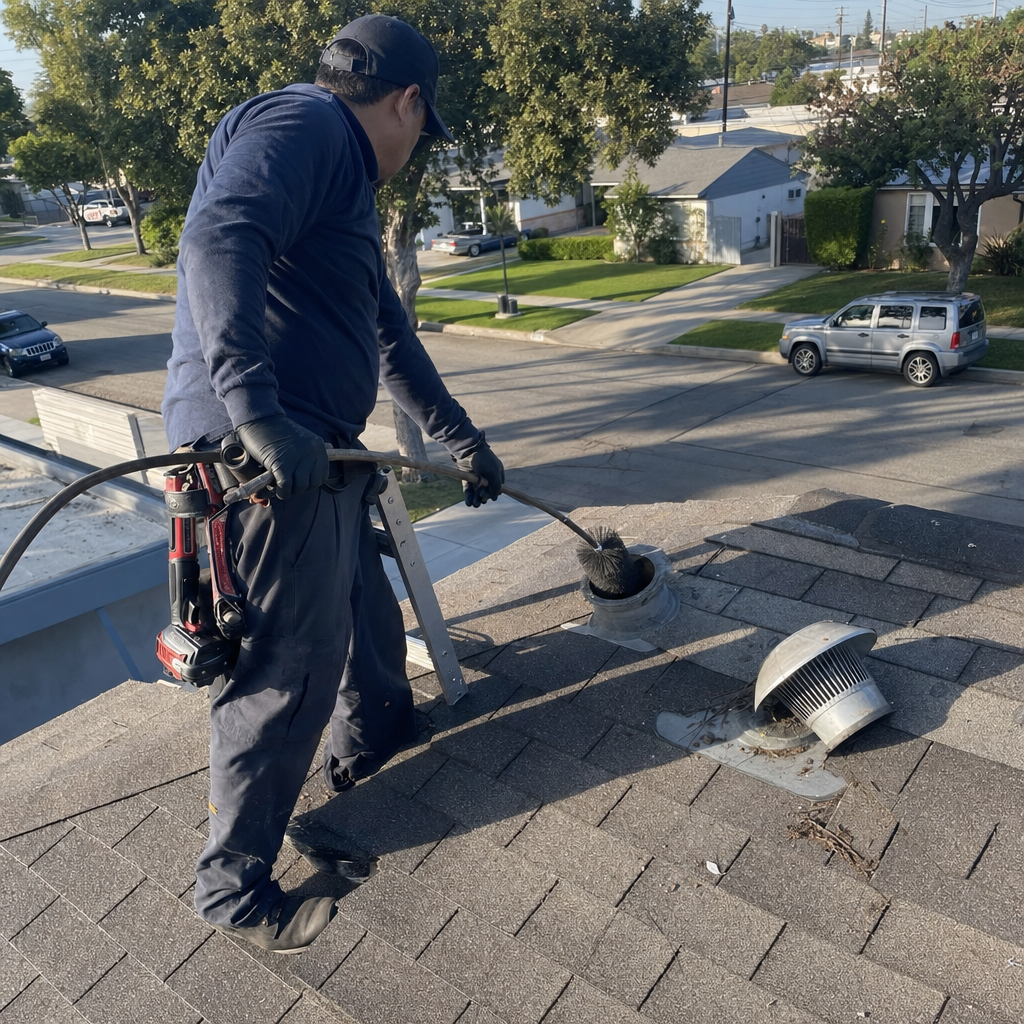
We recommend annual dryer vent inspection, with cleaning as needed. Homes that dry multiple loads daily, use fabric softener sheets heavily, or have vent runs exceeding 25 feet with bends should consider semi-annual inspection. Our Dryer Vent Cleaning in Seymour and across Los Angeles includes airflow measurement; if static pressure exceeds manufacturer specification, cleaning is warranted regardless of calendar.
Air duct cleaning addresses indoor air quality and system efficiency. The interval varies by household conditions as detailed above.
When to schedule together: If both services are due within 6 months, combine them for single-visit efficiency. Our technicians can perform both with the same equipment setup in most homes.
When to separate: If your dryer vent shows restricted airflow but ducts were recently cleaned, don’t delay dryer service to wait for a combined date. Fire risk doesn’t coordinate with convenience. Conversely, if ducts need cleaning but dryer vent tested clear last year, address the immediate need without adding unnecessary service.
Common Mistakes to Avoid
- Waiting for visible dust at registers. By the time dust blows out, accumulation in trunk lines is severe. Register dust is a late indicator, not an early warning.
- Assuming new construction is clean. New Los Angeles builds often have construction debris in ducts from the rough-in phase. We’ve found drywall screws, insulation scraps, and sawdust in systems never occupied. Consider pre-occupancy cleaning for new purchases.
- Over-filtering with high-MERV inserts. MERV 13 and above filters in systems not designed for them restrict airflow, crack heat exchangers, and ice coils. Match filter to system capacity, not to maximum theoretical capture.
- Ignoring the return side. Homeowners clean supply registers because they’re visible. Return grilles and the return plenum collect more debris because all household air passes through them. Include returns in monthly wiping.
- Scheduling by calendar alone after major changes. New pet, finished basement, roof replacement, wildfire smoke event: these change your system’s load. Adjust your schedule to events, not just dates.
- Accepting cleaning without camera verification. Any provider should show you what they found and what they removed. Without it, you’re buying a claim, not a service. We provide this on every job, before and after, with no exception.
- Neglecting dryer vent until clothes stop drying. Extended dry cycles are a late symptom. Annual inspection catches restriction before efficiency loss or fire risk develops.
When to Call a Professional
Call for professional assessment when you notice persistent musty odors after blower startup, visible mold on registers or in duct openings, airflow that’s dropped significantly in specific rooms, or debris blowing from vents. After any water intrusion event, including roof leaks or plumbing failures near duct runs, professional inspection is warranted even if surfaces appear dry; our climate creates conditions for rapid microbial growth in enclosed spaces.
If your home has flexible ductwork exceeding 20 years, or if you have no maintenance history from previous owners, schedule camera inspection to establish condition before assuming cleaning is appropriate. In some cases, duct repair or partial replacement is the more honest recommendation.
Bellows Air Duct & Vent Co. offers free estimates in Los Angeles. A technician will inspect your system with cameras, explain what we find, and provide upfront pricing before any work begins. Call (844) 685-6342 to schedule. Our standing offers include a $89 Seasonal Tune-Up, $50 off any repair over $250, a free second opinion on any written estimate, and a permanent 5% senior and veteran discount.
Frequently Asked Questions
Most Los Angeles homes need professional duct cleaning every 3 to 5 years. Homes with pets, allergy sufferers, recent renovations, or older flexible ductwork should shorten that to 2 to 3 years. The specific interval depends on your household conditions and documented system baseline, not a generic calendar. Call (844) 685-6342 for a free estimate to assess your specific situation.
You can maintain registers, grilles, and filters monthly, but thorough trunk line cleaning requires professional equipment. Residential vacuums lack the suction and containment for ductwork, and improper tool insertion damages flexible duct or dislodges connections. For safety and effectiveness, hire a technician with camera inspection capability and proper negative-air or mechanical brush systems.
Camera inspection reveals the difference. If duct walls show tears, collapsed sections, or degraded liner material, cleaning may worsen damage. Rigid metal duct in good structural condition cleans effectively for decades. We inspect first and recommend honestly; our 90-Day Done Right Promise applies only to appropriate services, and we’ll tell you when replacement serves you better than cleaning.
Multiple factors specific to our region: prolonged dry season, Santa Ana wind events pressurizing your home, and common duct leakage in attics and crawl spaces that pulls in unfiltered air. If you’re changing filters regularly and still seeing rapid dust accumulation, duct leakage is the likely cause. Professional inspection with pressure testing identifies the source.
Schedule them together when both are due within 6 months for efficiency. Don’t delay either service solely to combine them; dryer vent restriction creates fire risk that doesn’t coordinate with your duct cleaning calendar. Our technicians perform both services in a single visit when appropriate, with separate airflow verification for each system.
Residential duct cleaning for a typical Los Angeles home ranges from $400 to $800 depending on system size, accessibility, and contamination level. Dryer vent cleaning typically runs $120 to $200. Bellows provides no-hassle upfront pricing before work begins; the number on the phone is the number on the invoice. Ask about our $89 Seasonal Tune-Up when you call (844) 685-6342.
The Bottom Line
An effective HVAC maintenance schedule starts with your actual home, not an industry average. Document your system’s baseline with camera inspection. Adjust intervals for pets, allergies, renovations, and duct age. Handle monthly filter and grille maintenance yourself. Schedule professional duct cleaning every 3 to 5 years for typical Los Angeles homes, every 2 to 3 years for homes with compounding factors. Inspect dryer vents annually for safety. Compare current conditions to your documented history rather than guessing. And work with a provider who shows you what they find before quoting work, stands behind results with a written guarantee, and has done so for decades.
Written by the team at Bellows Air Duct & Vent Co., serving Los Angeles since 2012.